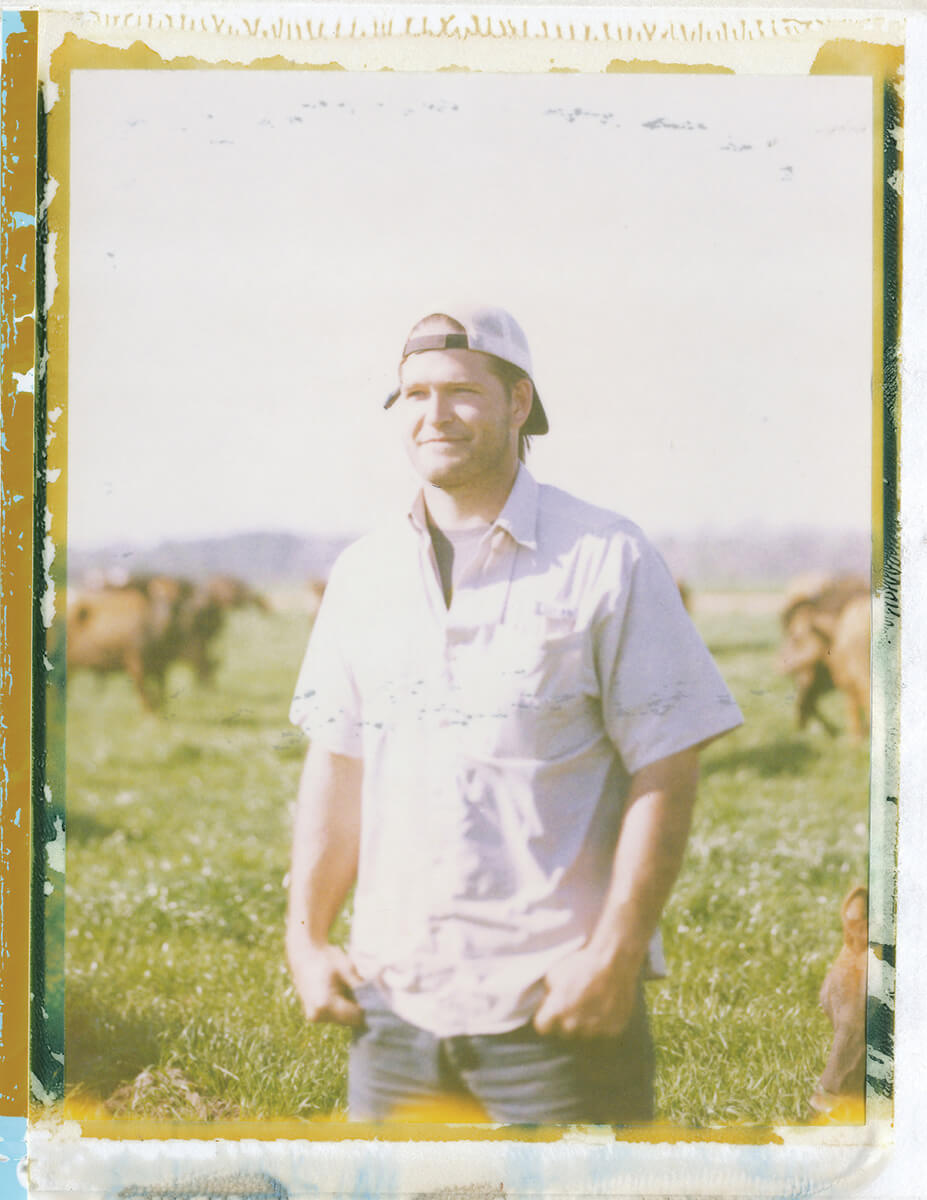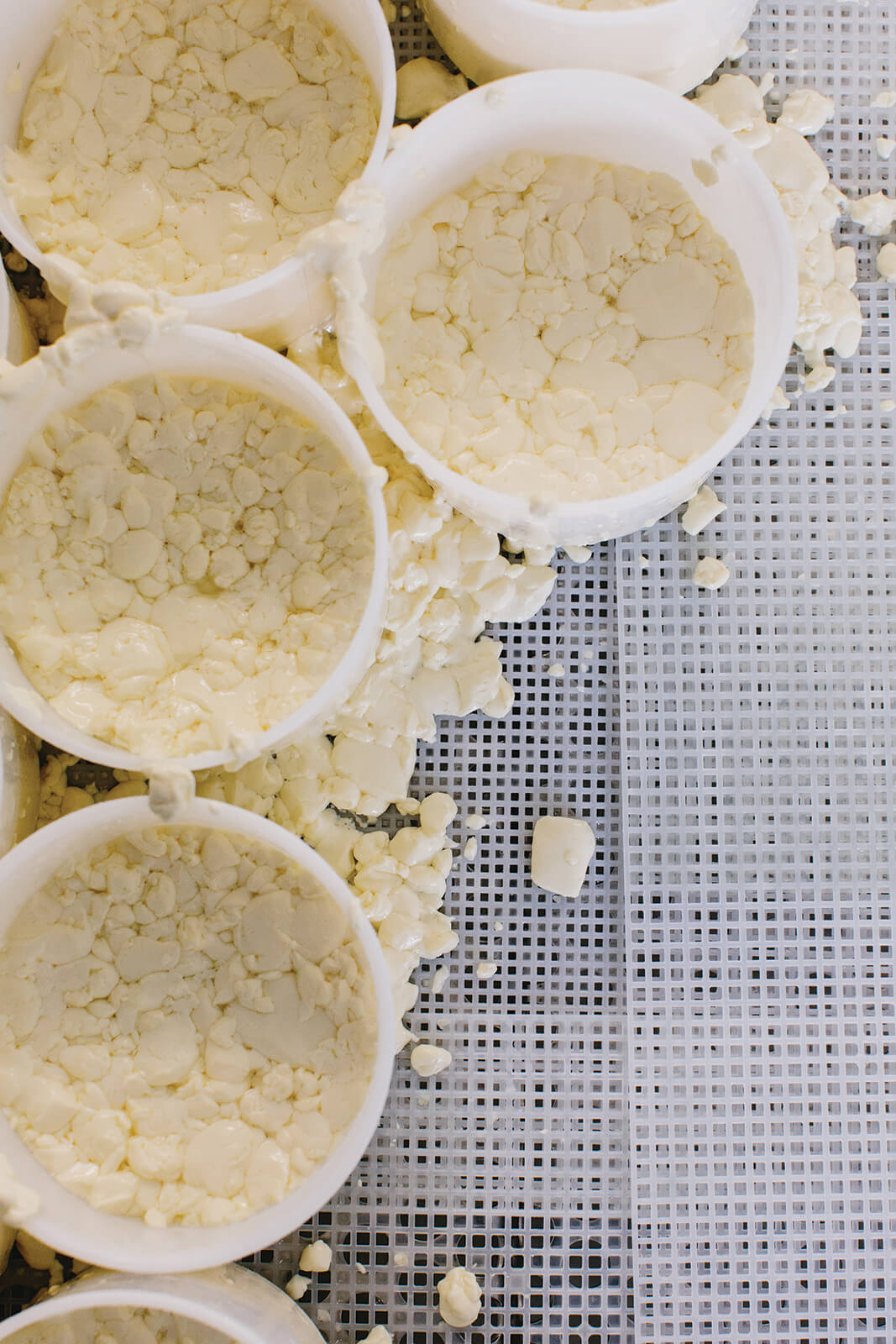

I’ve always been intrigued by Sweet Grass Dairy. The first time I tried any of their cheese, I was working at Quinones, the restaurant underneath Bacchanalia in Atlanta. It was probably 2008, and I was cooking with Green Hill. I immediately fell in love with it. And years later, on this trip, I finally got to see how it was made.
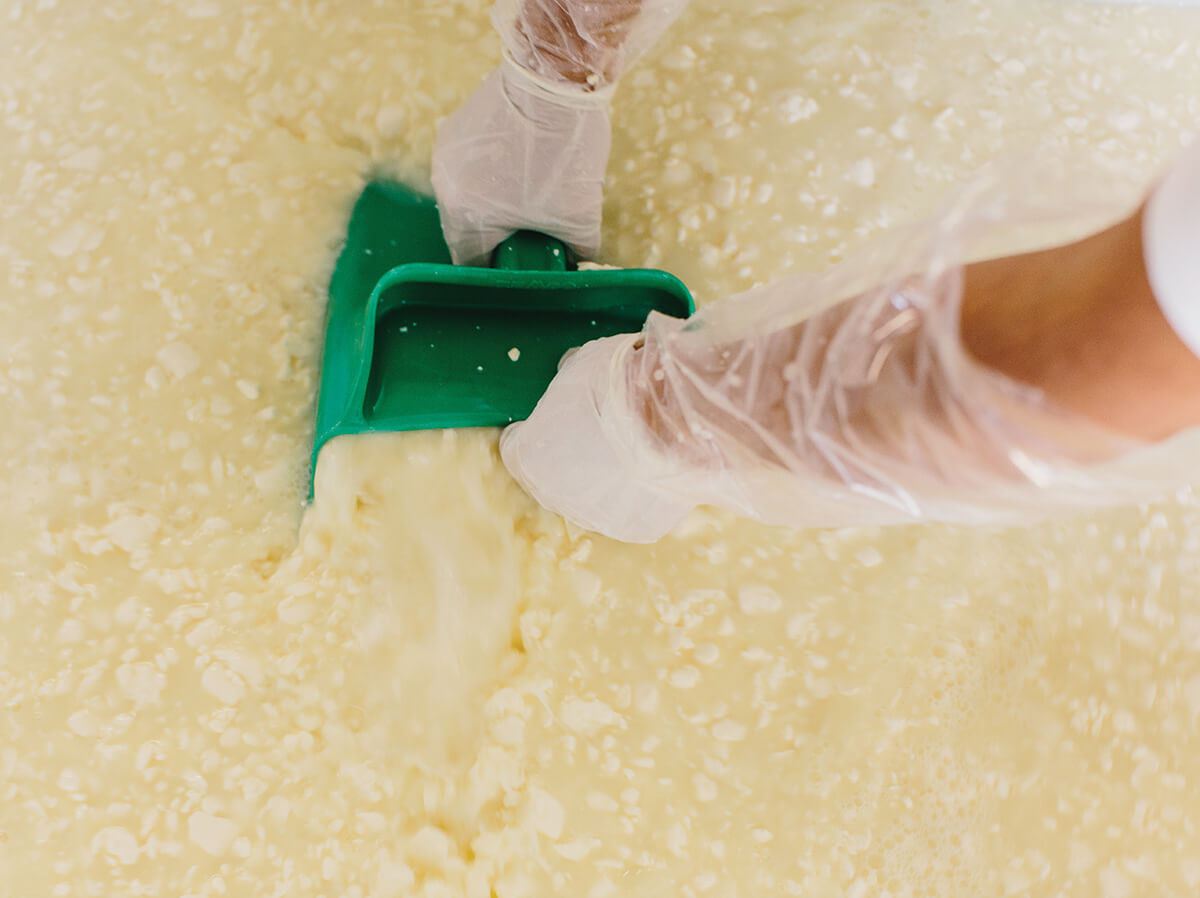

I didn’t know the Sweet Grass story in depth, but we got down to Thomasville and saw just how family-oriented it was. This is more than just a husband-wife thing. It’s a family thing—brothers, children, grandparents. Even the employees feel like family.
For what they’re trying to do, Sweet Grass is well-supported in a really small town. The production was overwhelming, how detailoriented it was. It’s not just about the cheese—it’s about the cows, the yogurt, the shop, the restaurant, the city. I would never think a restaurant the caliber of Blue Coop would be in a town like Thomasville. But the city is growing with them.
I think it’s really awesome the way they do it. It’s just the right way. They handle every aspect of the process, from start to finish, which insures their cheese is special. It’s all about where they are, how they raise the animals, how they take care of the animals, and how they process the milk into cheese. Sweet Grass cares about all the same stuff Brother cares about: where food comes from, how it’s grown and produced and managed, the importance of sitting down at a table. It all happens here.
We hope you enjoy.
— Ryan Smith
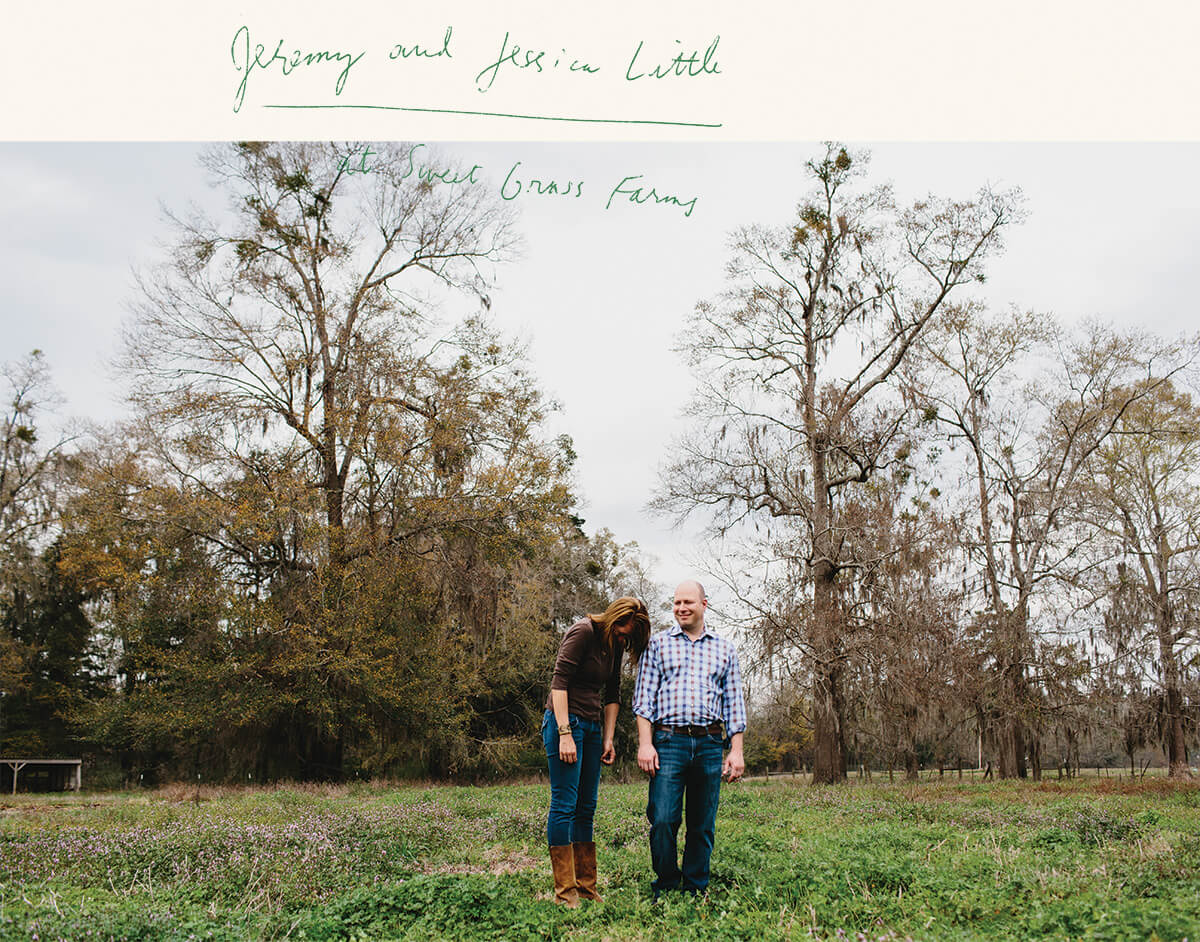
Deep into South Georgia—past Albany, Tifton, and Moultrie, almost to where you reach the end of the Peach State altogether—there’s a dirt road called Limousine Lane. It juts off Georgia State Route 300 seven miles north of downtown Thomasville, clearing a path away from the rest of the world. An actual limo would have trouble navigating the winding, hole-riddled path, framed by fields of donkeys, lambs, Berkshire pigs, and Spanish-moss-covered trees that stretch out on either side just about into infinity. The road ends at a two-story house where a miniature pinscher and a long-haired dachshund make an awful racket. The dogs are understandably protective: Across from the house is a long, tan, single-level structure where some of the country’s best cheese is made.
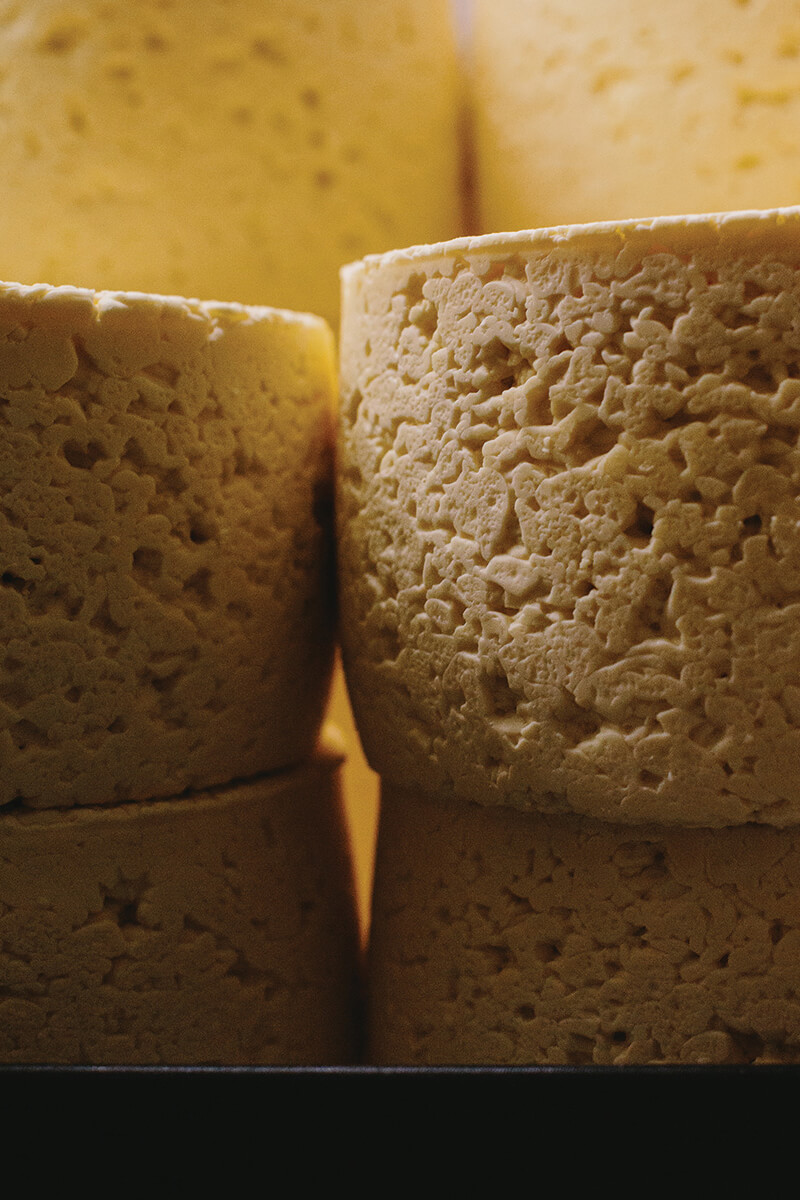
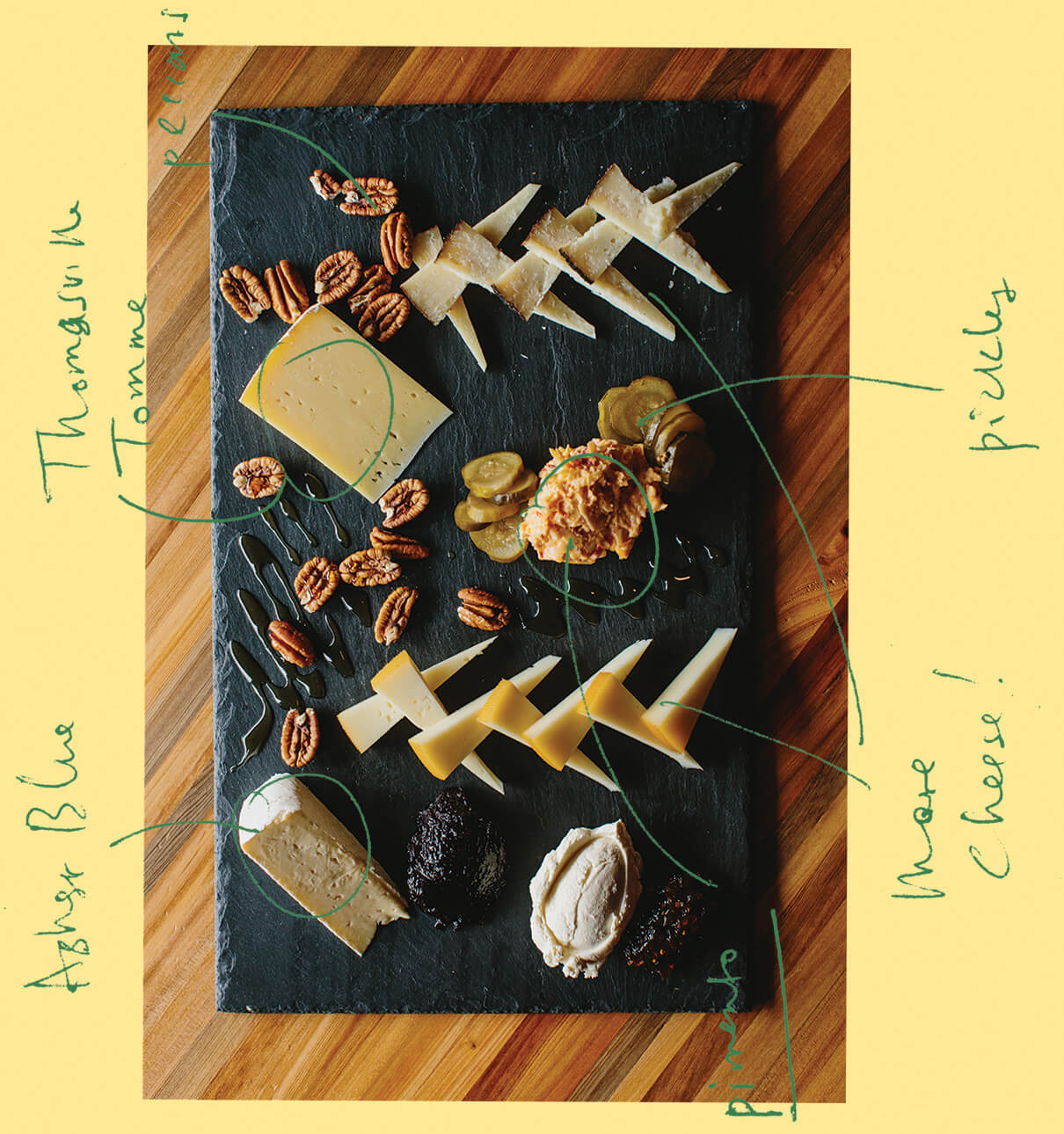
There’s Green Hill, a double-cream, soft-ripened, Camembert-syle cheese that goes down a little too easy, especially at room temperature. Asher Blue is a complexly flavored blue cheese with a mild finish. Thomasville Tomme is a buttery, semi-firm take on a French mountain Pyreneese Tomme. Georgia Gouda is made in the Dutch style. Lil Moo is a ridiculously creamy, fresh, spreadable cheese, similar to a German Boursin. You can eat it with a spoon if no one’s looking. Or even if they are.
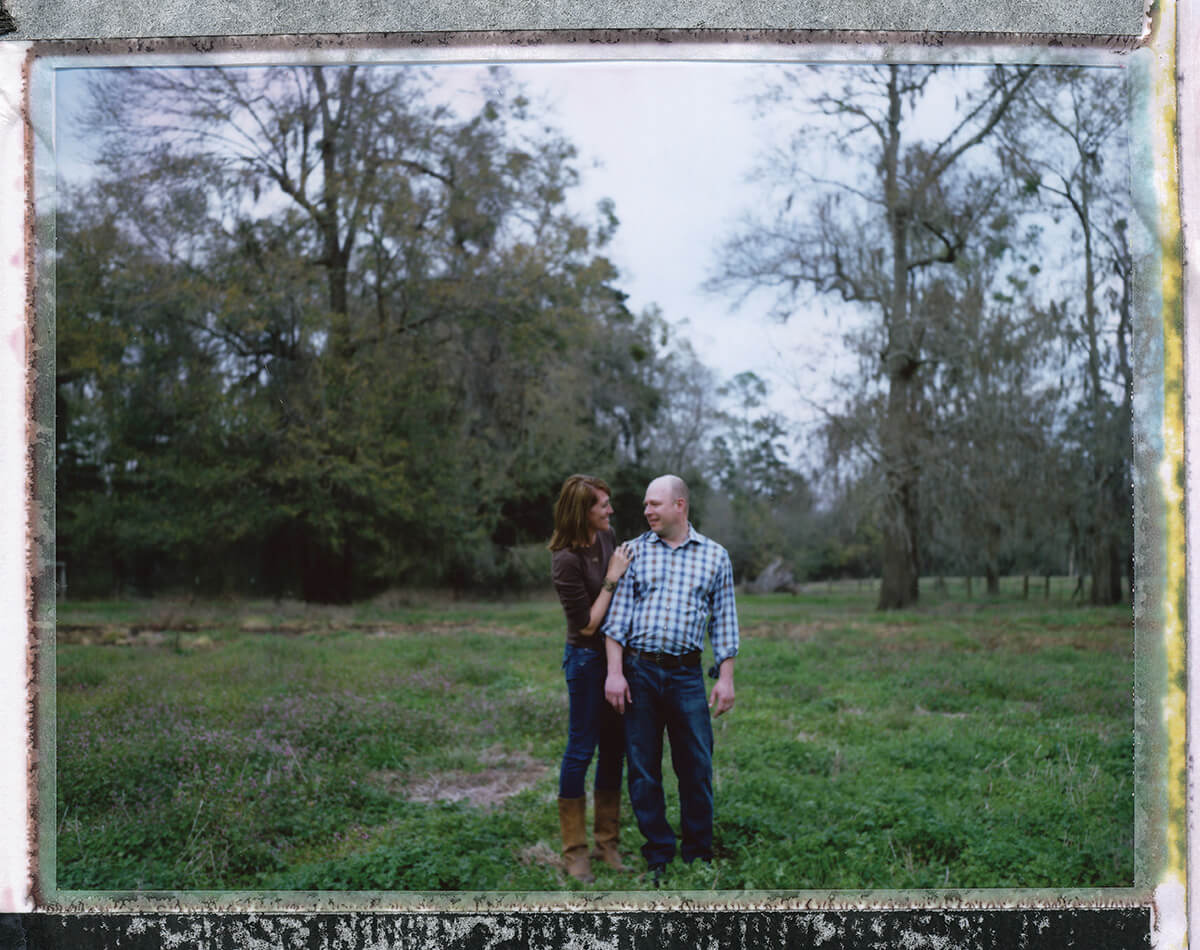
Jeremy and Jessica Little live in the house at the end of Limousine Lane with Their four young sons: Aidan, Asher, Finn, and Rowan, all under 12 years old. (Plus, those dogs: Zoe and Locksley.) They own this place, Sweet Grass Dairy. Fifteen years ago, this wasn’t part of the plan. Back then, they were living in Atlanta, working in restaurants while Jessica finished up a marketing degree at Georgia State University and Jeremy saved up to go to culinary school. Jessica had grown up working on her family’s farm, but the young couple had their sights set on big-city life.
But then, over dinner one night back in Thomasville, Jessica’s parents made them an unlikely offer. Al and Desiree Wehner had already made a name for themselves with the grass-fed, mainstream-bucking milk from their farm, Green Hill Dairy, and they had recently expanded into cheesemaking. Sweet Grass, the new operation, wasn’t instantly profitable, but it was already getting popular—and they needed some help.

“My parents casually mentioned that the opportunity was available for us to move back to the farm to help with the cheese-making business,” Jessica remembers. “I loved Atlanta, and had no desire to move back at that time. But Jeremy saw the opportunity and really wanted to do it. He was drawn to the ability to work with his hands and the actual craft of making cheese.”
At first, Jessica and Jeremy agreed to stay at Sweet Grass for five years, just to help get the business off the ground. After three years, they bought the farm. Twelve years later, they’re still here.
The Wehner-Little empire, now generally called Sweet Grass, encompasses three dairy farms, a yogurt company, a cheese shop, and a restaurant. Al and Desiree tend to recruit from within their own ranks: Their older son Clay now owns Green Hill and helps his dad run two other dairy farms, Grassy Flats and Jumping Gully. And younger son Kyle runs his yogurt company, Dreaming Cow Creamery, out of Jumping Gully.
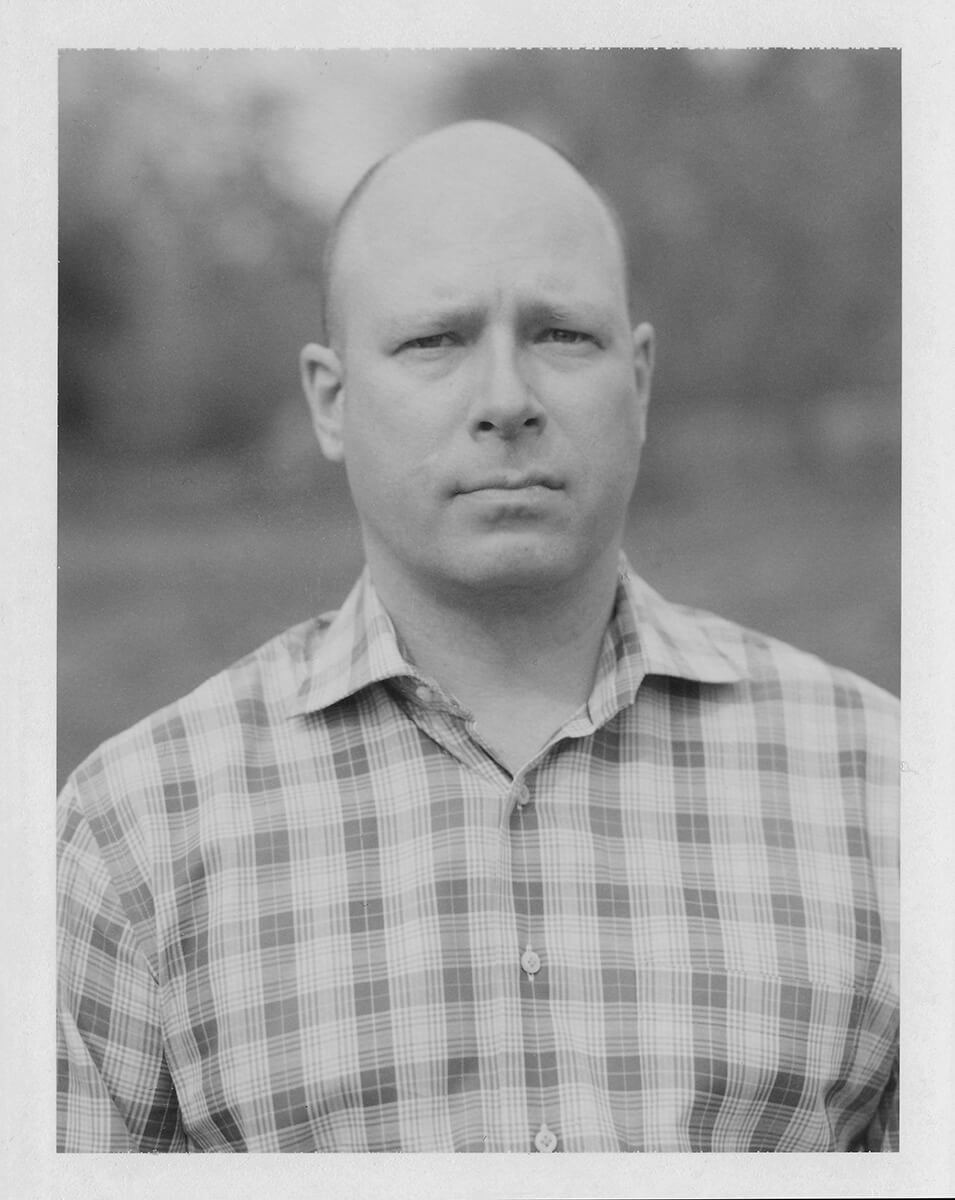
We went down for a visit one Friday in early April. “I find it fascinating you’re all involved in this family,” Ryan said toward the end of that long day.
“Would you not be involved?” Kyle replied. “It’s very special.”
Al and Desiree Wehner are now in their fourth decade of dairy farming. They met as students in the University of Georgia’s animal science program, and in 1981, were hired by some Italian investors to run a conventional dairy farm in North Florida. Pleased with the couple’s work, the investors eventually let them purchase 50% of the farm. About a decade later, though, the Wehners changed course. After learning about New Zealand-style rotational grazing at a conference in 1993, they sold back their half of the conventional farm and used the proceeds to buy Green Hill, a 300-acre farm just north of Thomasville.
The switcheroo may have seemed drastic, but no more drastic than the difference between their old and new methods of farming. At Green Hill, the Wehners got busy implementing rotational grazing, which involves moving livestock from one pasture area (or “paddock”) to another, allowing the ground cover of the resting paddocks (rye grass, in this case) to grow back in between grazing sessions. Al and Desiree irrigated continually to encourage the grass’s growth, ensuring that the forage, the soil, and the animals were all as healthy as possible.
Conventional dairy farms, like their earlier operation, confine cows to barns with no access to grass. The animals are essentially stuffed full of energy (high-calorie grains and hay), then milked to death. After two or three years, when their milk yield drops or they can no longer get pregnant, the animals are “culled from the herd,” which often means “sent to the slaughterhouse and turned into fast food burger meat.”
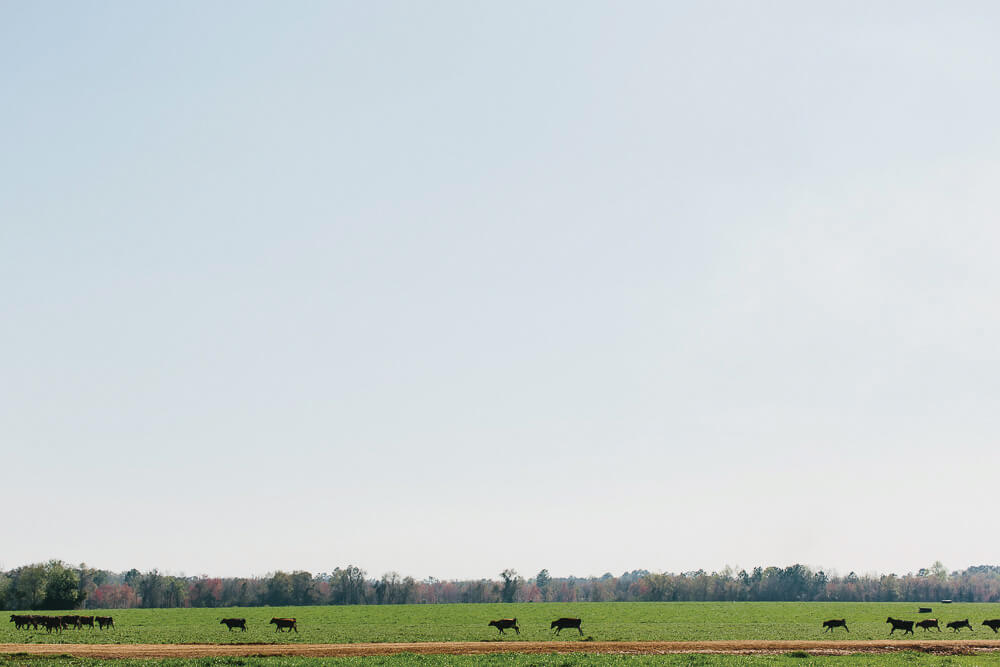
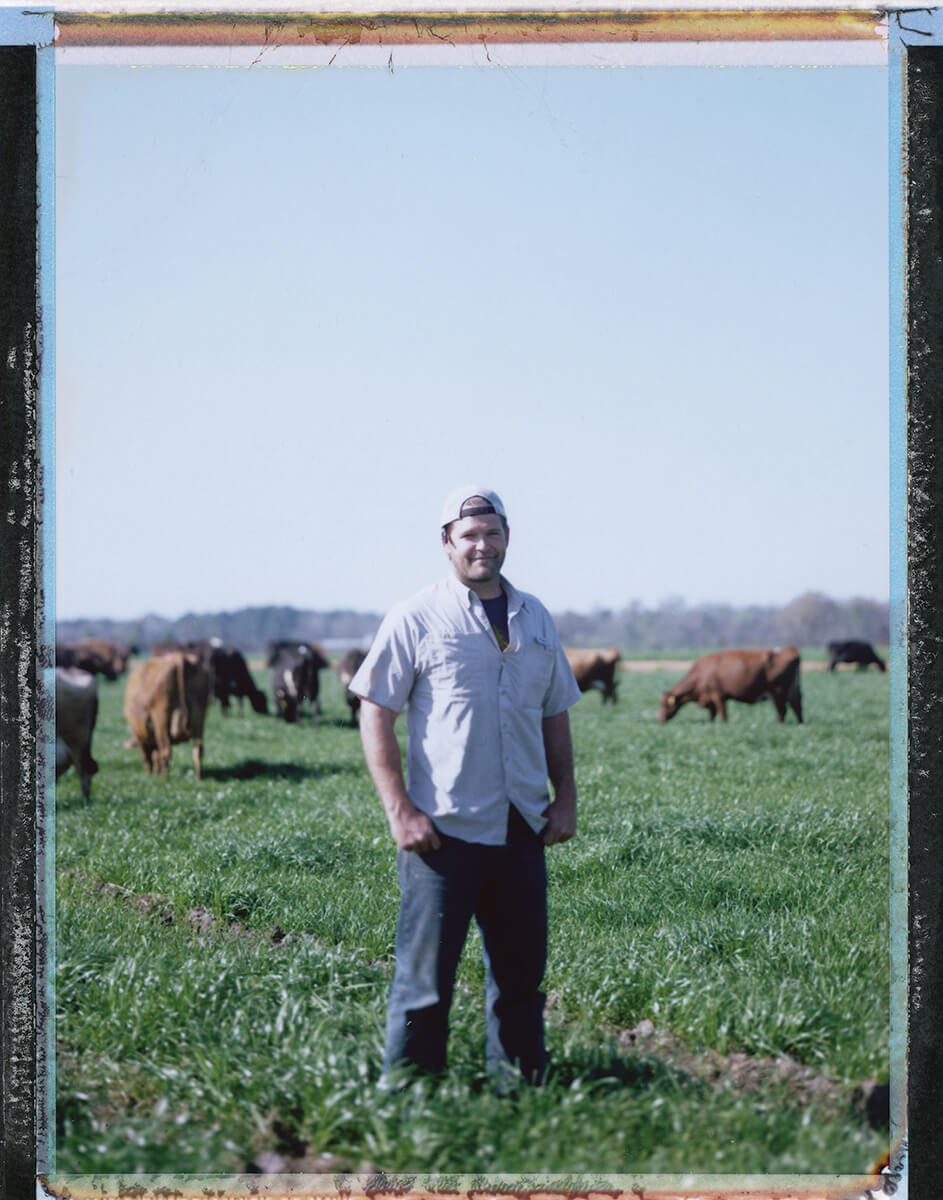
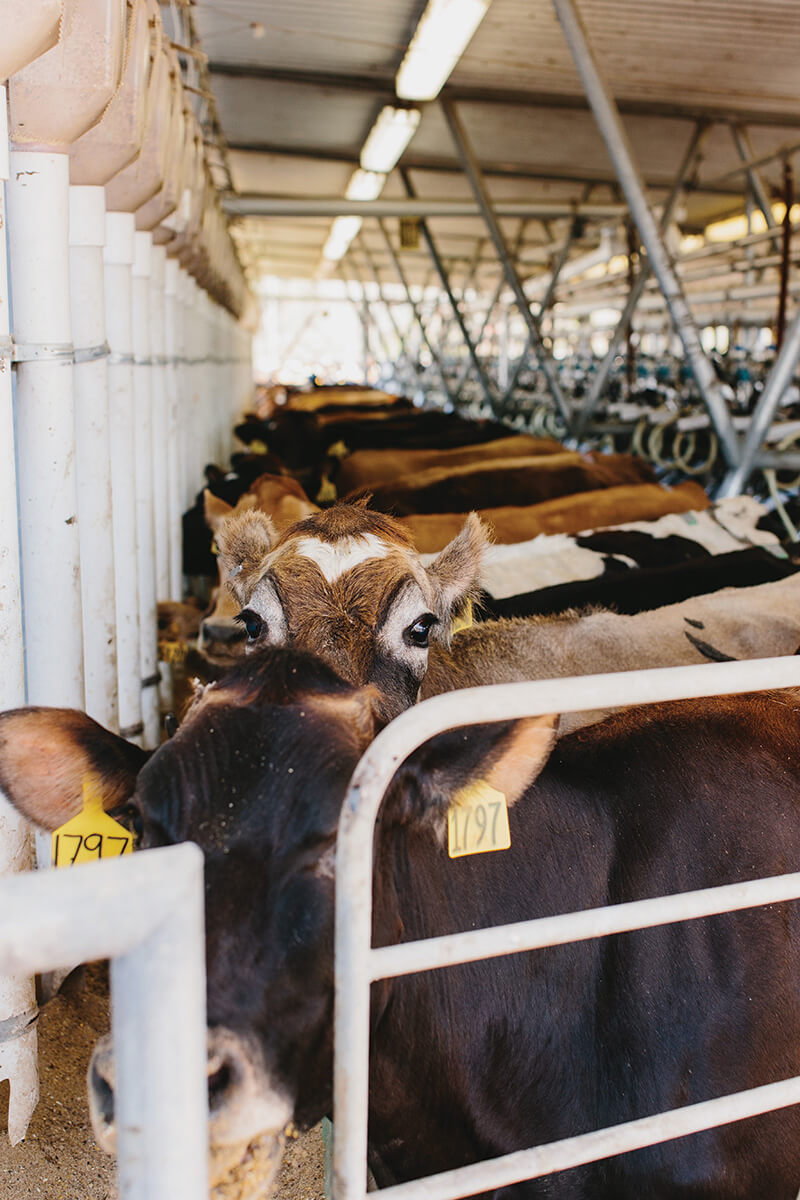
But with rotational grazing, especially in South Georgia’s mild climate, cows can stay outside all year, living a relatively stress-free existence. And less stress equals better performance: a Wehner cow’s milking career lasts 12-15 years, with easy breeding. Each of their three dairies has 300-350 acres for around 500 cows. There are no barns. The cows are milked twice a day, and spend the rest of their time eating and relaxing. They’re eventually culled from the herd as well, of course, but at that point, they’ve lived a longer, happier life. As a result, the milk is better, too: “rich, buttery, and unctuous,” as Jessica describes it.
“Jeremy says it’s his job not to mess up the milk when he’s making cheese,” she said. “To make sure the key characteristics shine through.”
There are other creatures, too, with various roles. Donkeys (originally to protect the since-departed dairygoats [that’s right, guard donkeys], now they just kind of hang out), non-dairy goats and sheep (that graze and not much else), chickens (for personal consumption, both meat and eggs), and bees (for honey). The Berkshires, meanwhile, are there mainly to eat the operation’s vast whey output—and to then be eaten by humans later.
“If I could come back as anything, I’d want to be one of those pigs,” said Gabe Goodlett, Sweet Grass’s sales and distribution manager. “It’s a short-lived existence, but it’s a good one.”
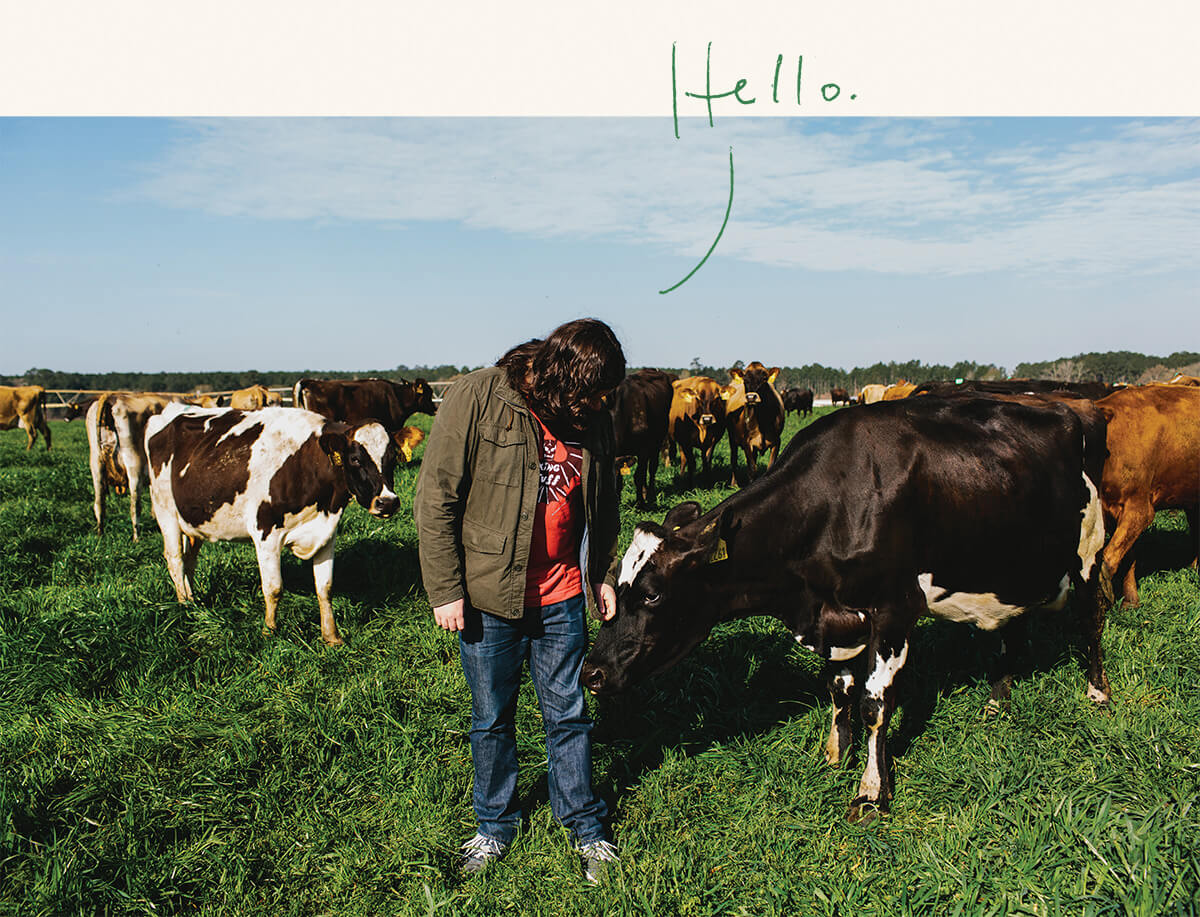
As for how the cows feel about their life with the Wehners, we got a pretty good idea during our tour of farm. Clay insisted that we watch a herd walk from the milking shed to the fresh paddock where they’d be feeding next. Several of the cows seemed to leap for joy as their hooves first met the vast, ready-to-eat pasture. It was almost like they were dancing, or clicking their hooves midair. Later, Kyle introduced us to Amanda, a cow he calls “the 800-pound cat.” She let us pet her and then followed us around the fields, nudging our backs with her head when she felt it was time for more love. It was always time for more love.
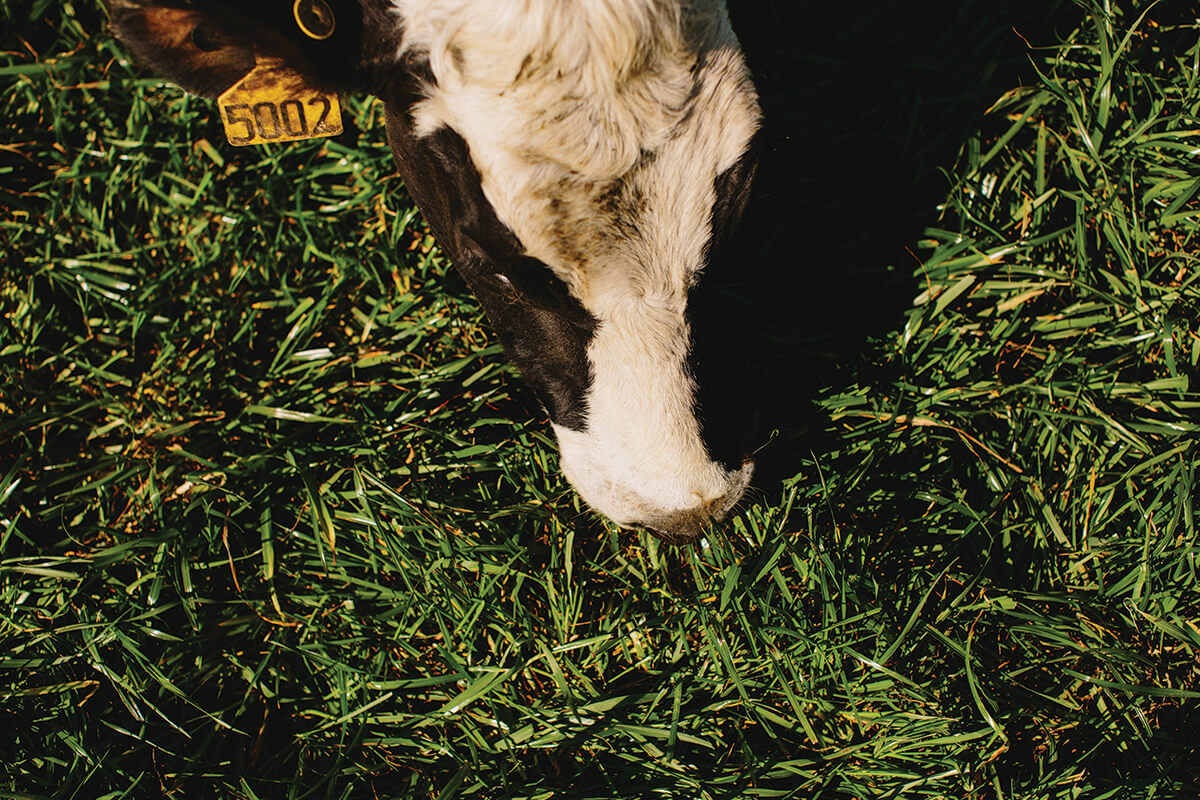
Each of their three dairies has 300-350 acres for around 500 cows. There are no barns. The cows are milked twice a day, and spend the rest of their time eating and relaxing. They’re eventually culled from the herd as well, of course, but at that point, they’ve lived a longer, happier life. As a result, the milk is better, too: “rich, buttery, and unctuous,” as Jessica describes it.
Back in the 1980s, Al and Desiree’s purchase of Green Hill provoked all manner of “Are they insane?” suspicions from colleagues and neighbors. But they were laying the groundwork for what is now the Sweet Grass modus operandi: “A commitment to a better way.” That commitment is to their family, their animals, and their products—but it’s a pledge to the town of Thomasville, too.
Right after Sweet Grass got its bearings, the Littles opened a cheese shop: first at the farm (2006), then on a street corner next to a BP station less a mile from the farm (2008), then right in the middle of downtown proper (2010). They got more foot traffic there, and when business slowly but surely picked up at the shop, downtown Thomasville started to evolve along with it.
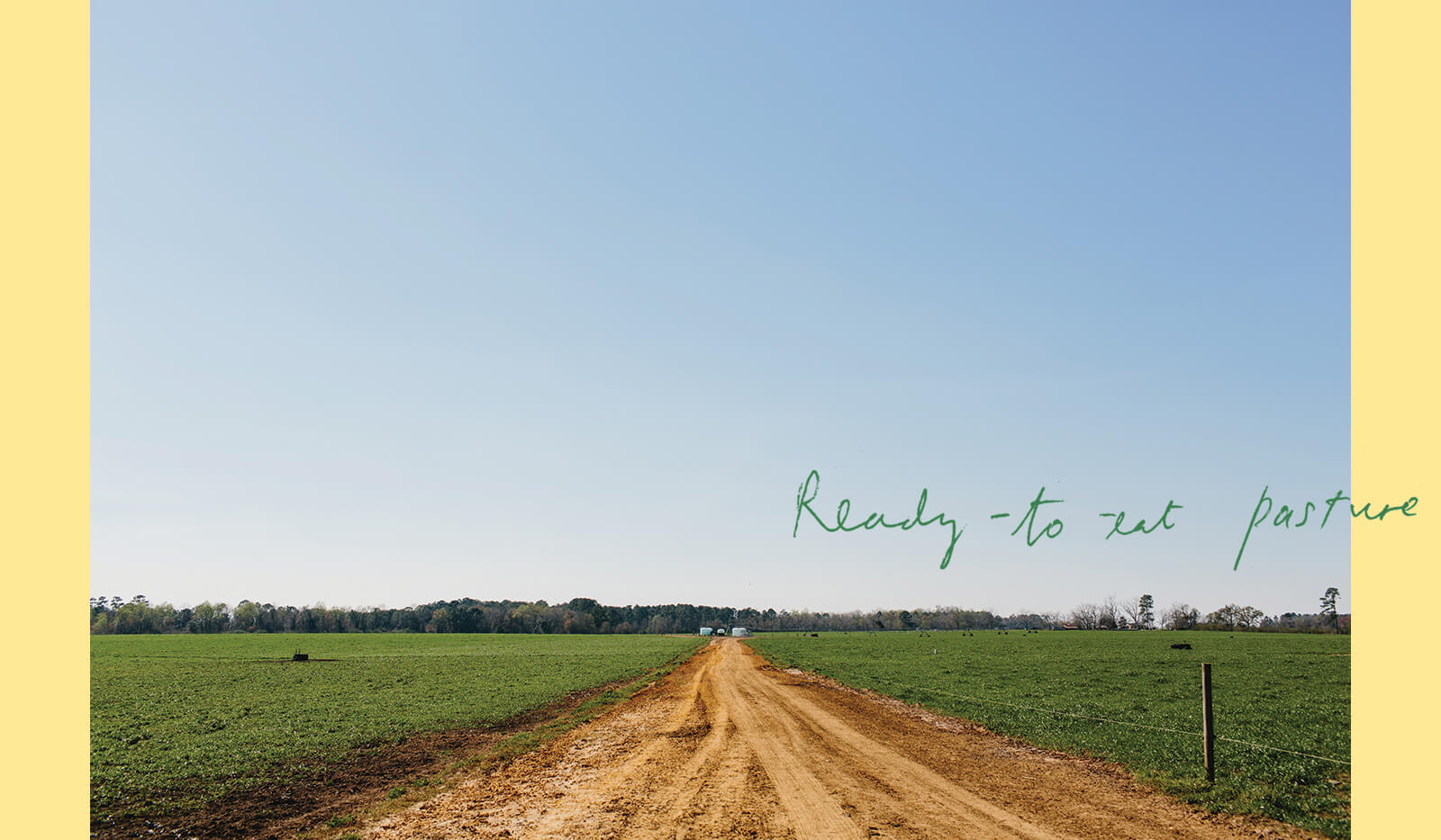
“This place really helped change and push businesses opening in downtown,” Gabe told us at the store. As we talked, he force-fed us cheeses, sandwiches made with those cheeses, peppers from Spain, nuts. Also, beer—the cheese shop has the best craft beer game in Thomasville. We sipped on Port Brewing’s grassy, citrus-laden Wipeout IPA, while bottles of Mr. Chipper, Westbrook’s pleasantly tart Flanders-style red ale, sat waiting to be purchased on a nearby shelf. “Before,” Gabe said, “there was really nowhere you could go [in Thomasville] and get a beer. It was pretty conservative.”
These days, though the town’s population barely cracks 18,000, downtown is teeming with local restaurants: Jonah’s Fish and Grits, Moonspin Pizza, a fine-dining spot called Liam’s, a dive bar that serves chili dogs, another pizza place (a brick-oven joint called Paulies), and the charming Grassroots Coffee. Next door to the cheese shop is Sweet Grass’s own restaurant, Blue Coop, which opened in December 2013, and serves New American cuisine (including seafood fresh from the Gulf and, yes, plenty of cheese) alongside a thoughtful drink program. “The food scene here is getting more progressive than even Tallahassee, which is six times the size of this place,” Gabe said. “They’ve got some good local spots, but it’s just coated with bigbox franchise restaurants, Applebee’s and things like that.”
For all of Thomasville’s recent growth, most of the folks who work at Sweet Grass could still do what they do elsewhere, in a bigger city or on a bigger farm, and get paid much better. But there’s a reason they’ve chosen to live in this very small town and make this very special cheese. “In my previous life, I did what I did, and I didn’t like it,” said Gabe, who did administrative work for the Florida Bar. “For eight hours a day, I was somebody different. It was just weird. You start to realize as you get older that you spend more time with the people you work with than you do your own family, and doing the hobbies that you’re really passionate about. At the end of the day, life is too short to spend doing something you can’t stand just to make a paycheck. When I first started working at the dairy, I took a 50% pay cut. I wasn’t making much at my other job either, so then I was making jack shit. But at the end of the day, I felt great, I enjoyed doing it, and I cared about what I was doing. That has a massive positive effect on you as an individual and the people around you. I refuse to do anything I’m not in love with. And if I ever leave Sweet Grass, it’s because I love something else a little bit more. But they’ve got me for a while.”
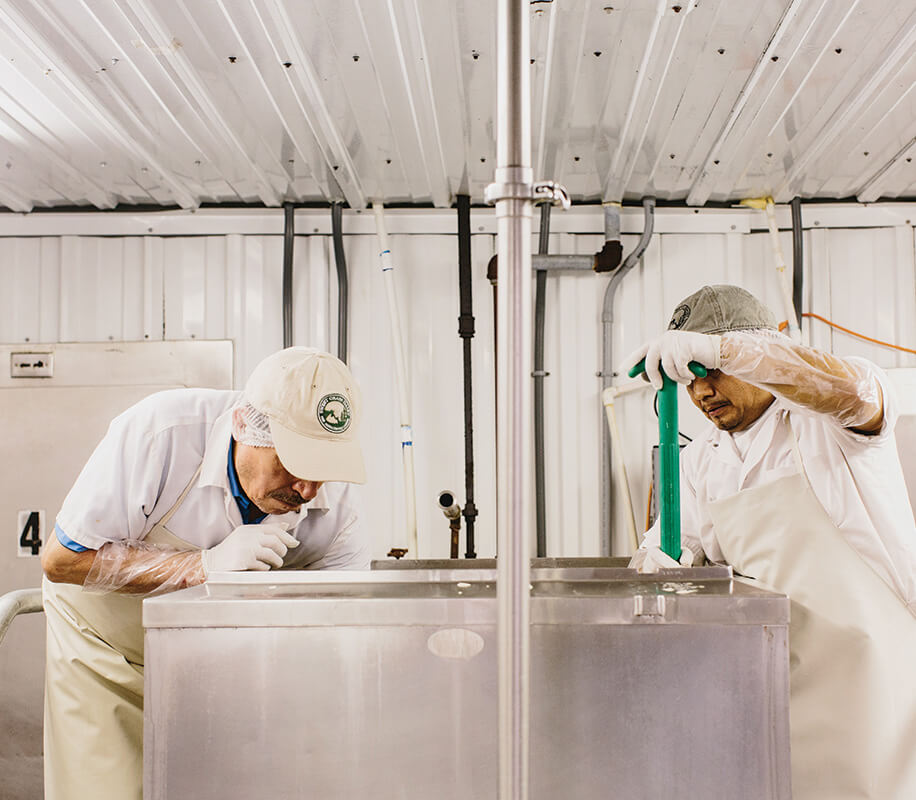

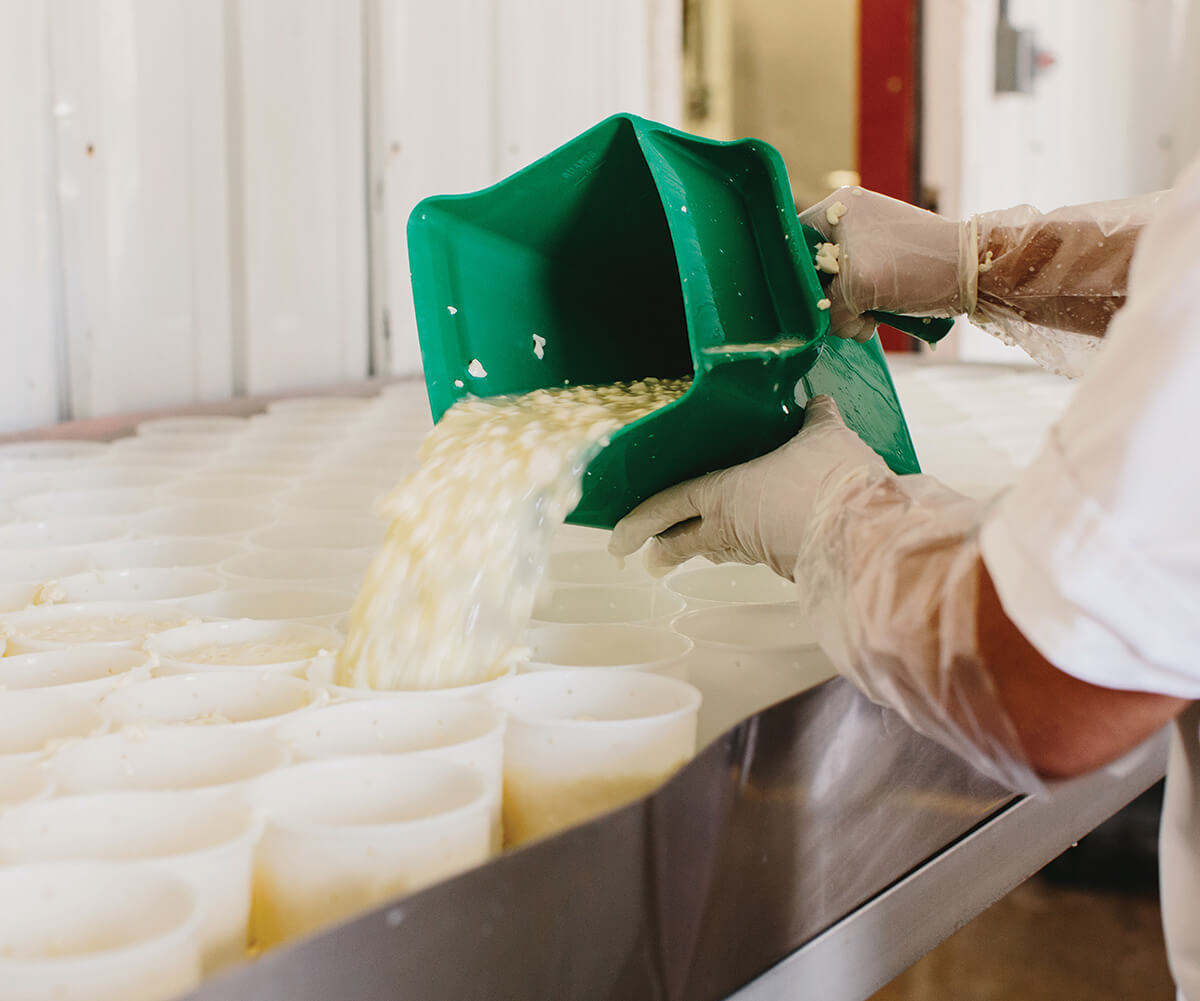

Running a dairy isn’t glamorous. Goats kick—and fart on—your face. When cows get scared or anxious, they literally shit themselves. The effect is kind of like turning on a hose that emits a dark green liquid tube of fermented grass, sometimes for 10 or 12 seconds at a time, falling several feet to the ground with a splat. It’s grotesque, but oddly satisfying.
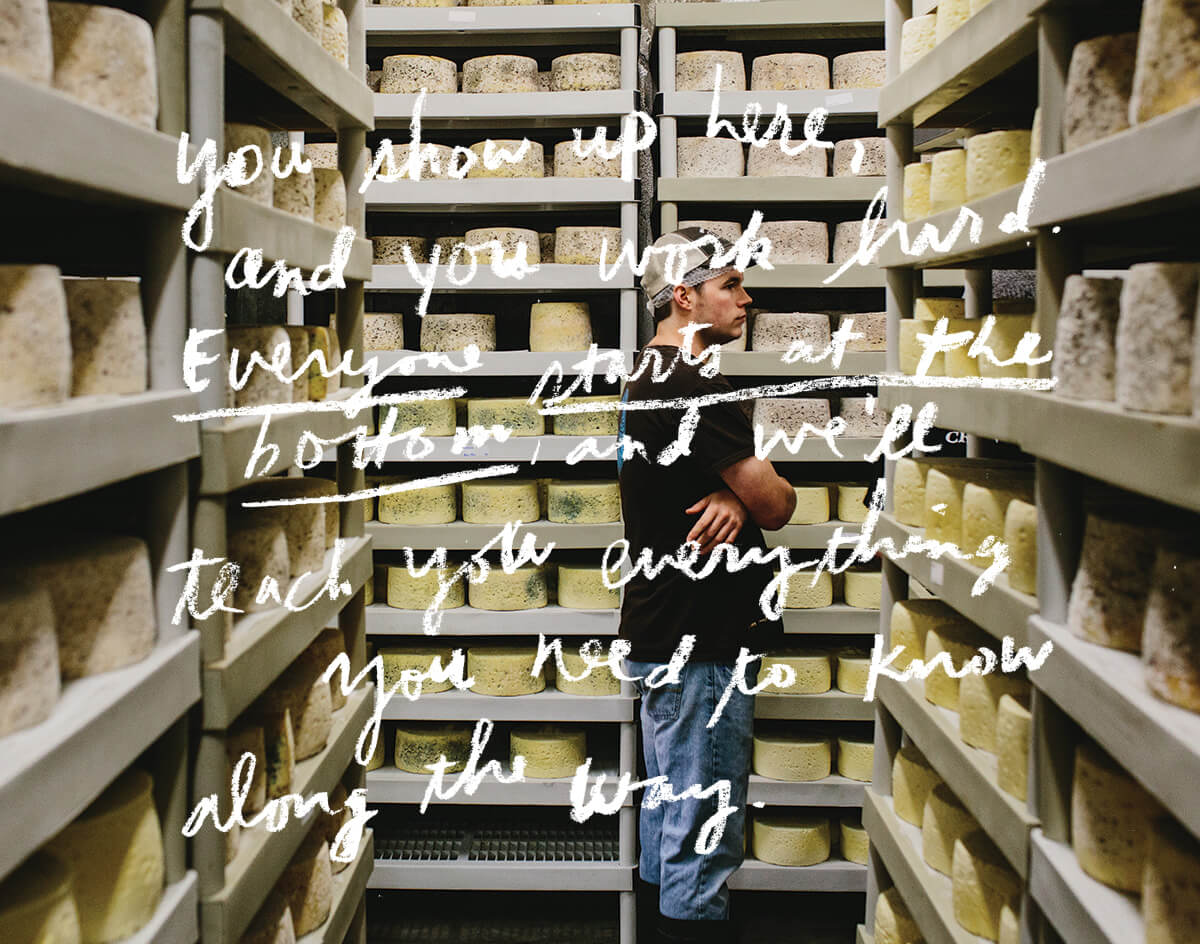
“Nobody really starts out here with any experience,” Gabe explained as he walked us around the cheesemaking facilities. “It’s a different environment. You show up here, and you work hard. Everyone starts at the bottom, and we’ll teach you everything you need to know along the way. I don’t think we’ve had anybody with specific cheese experience that’s started working here.”
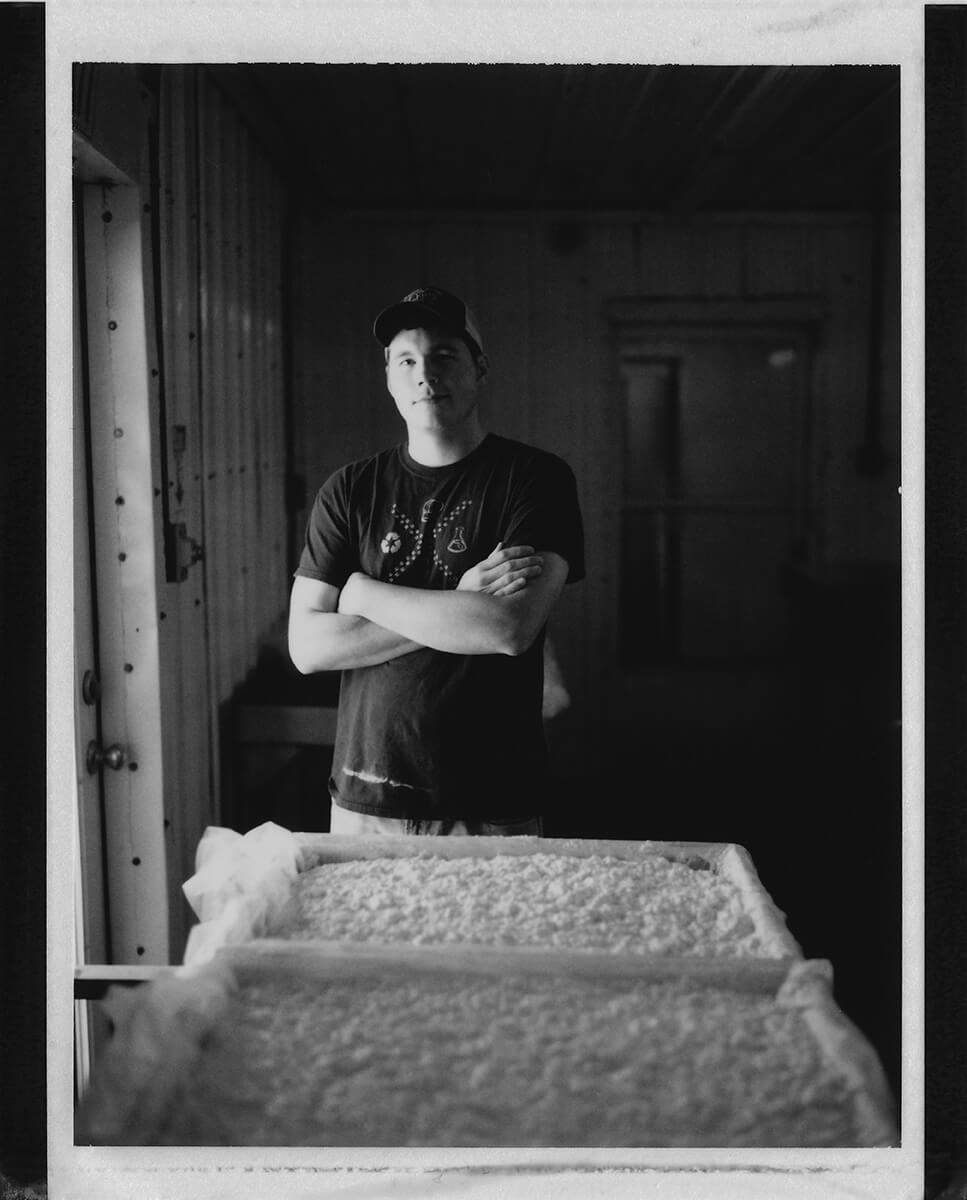
Sweet Grass production manager and head cheese maker George “GW” Jenkins went to culinary school, worked in restaurants in Europe, got a job slinging burgers in Chicago, eventually worked for a retirement home. There, he cooked four meals a day for 50 people with a budget of $5 per person per day. After a while, he just couldn’t take it anymore. “It was a nightmare,” he told us. “I found a job posting on Craigslist, of all places, for a cheesemaker position that I wasn’t qualified for. Shot ’em an email, heard from Jeremy the next day.”
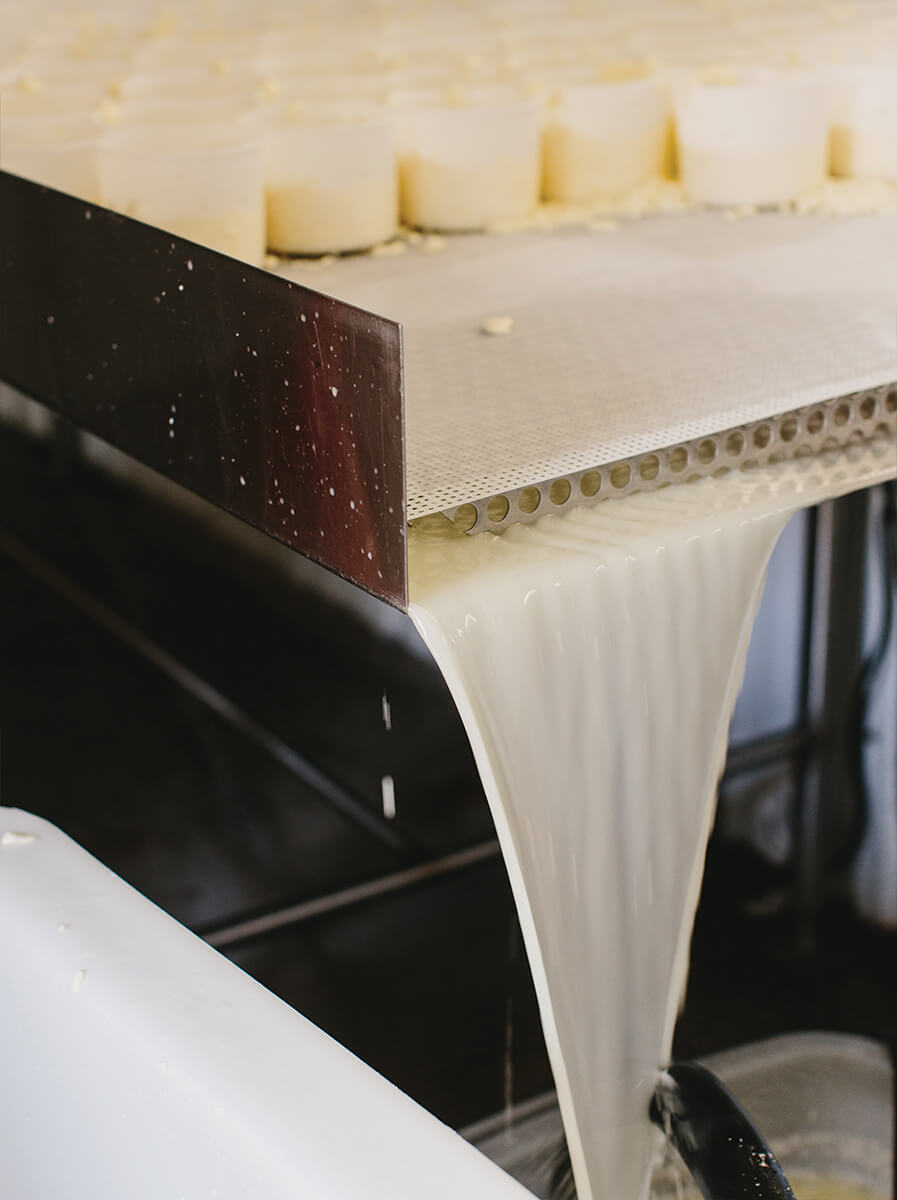
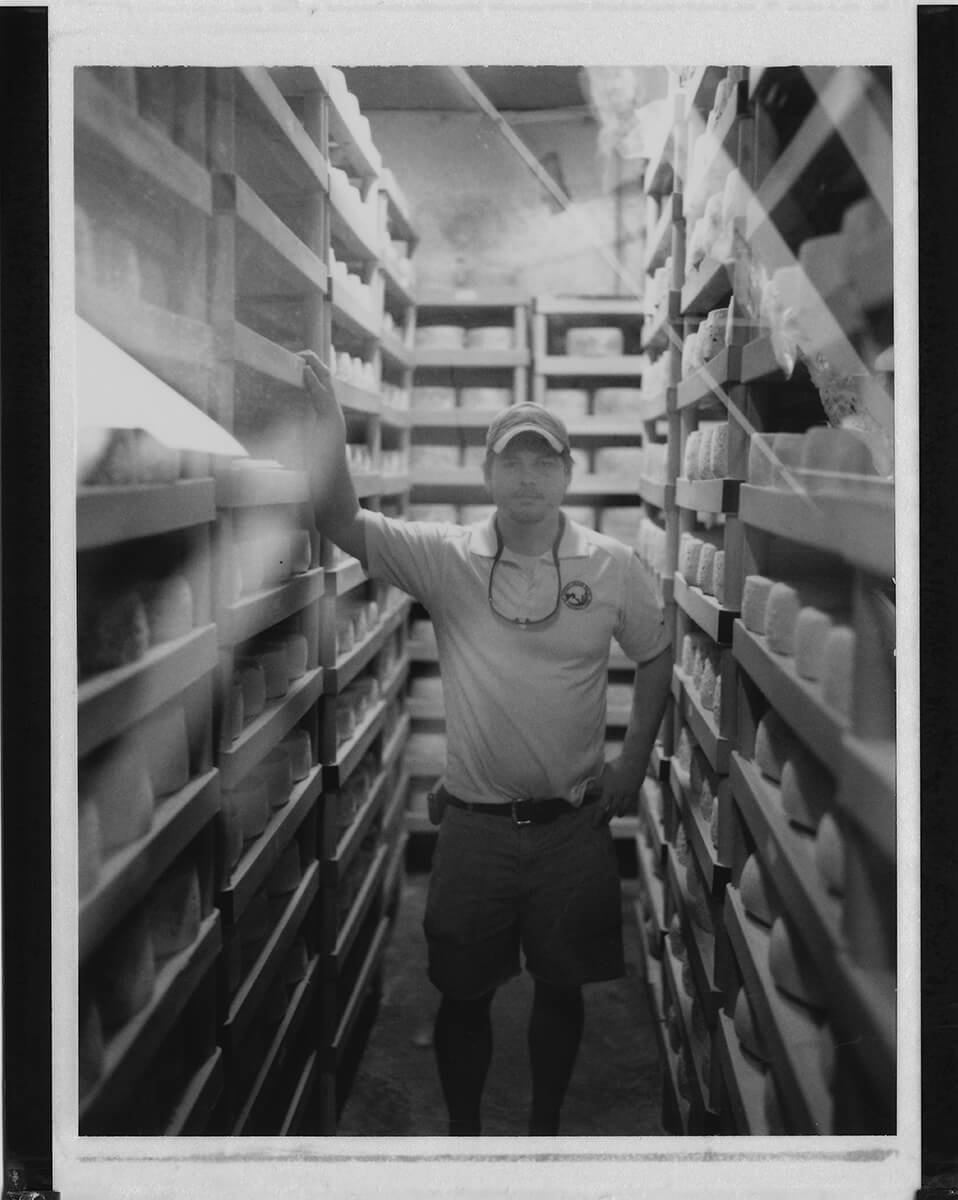
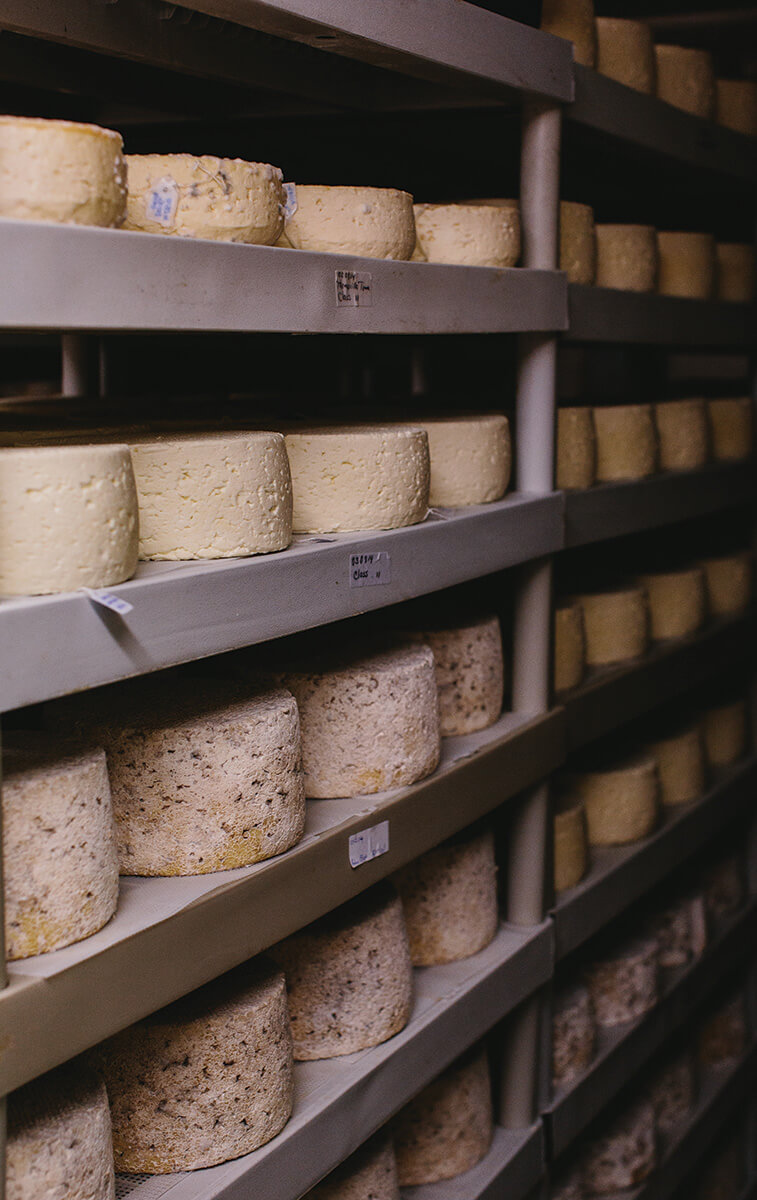
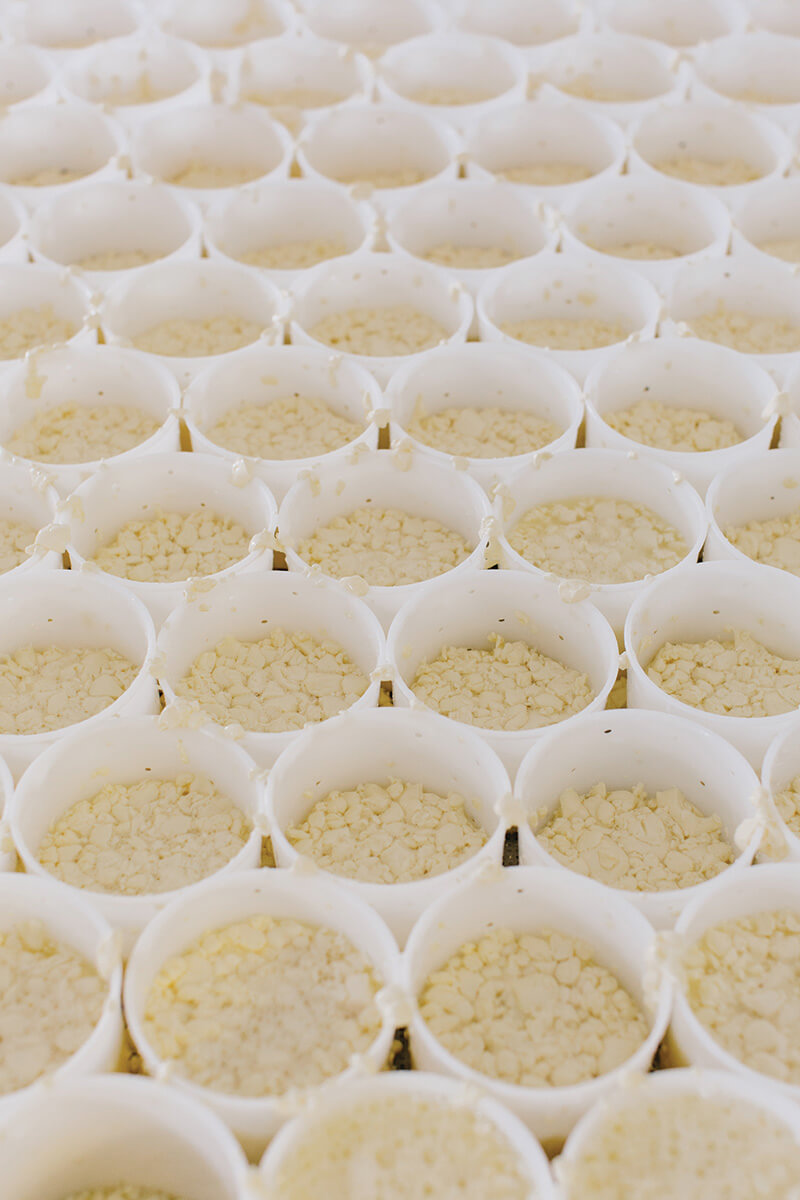
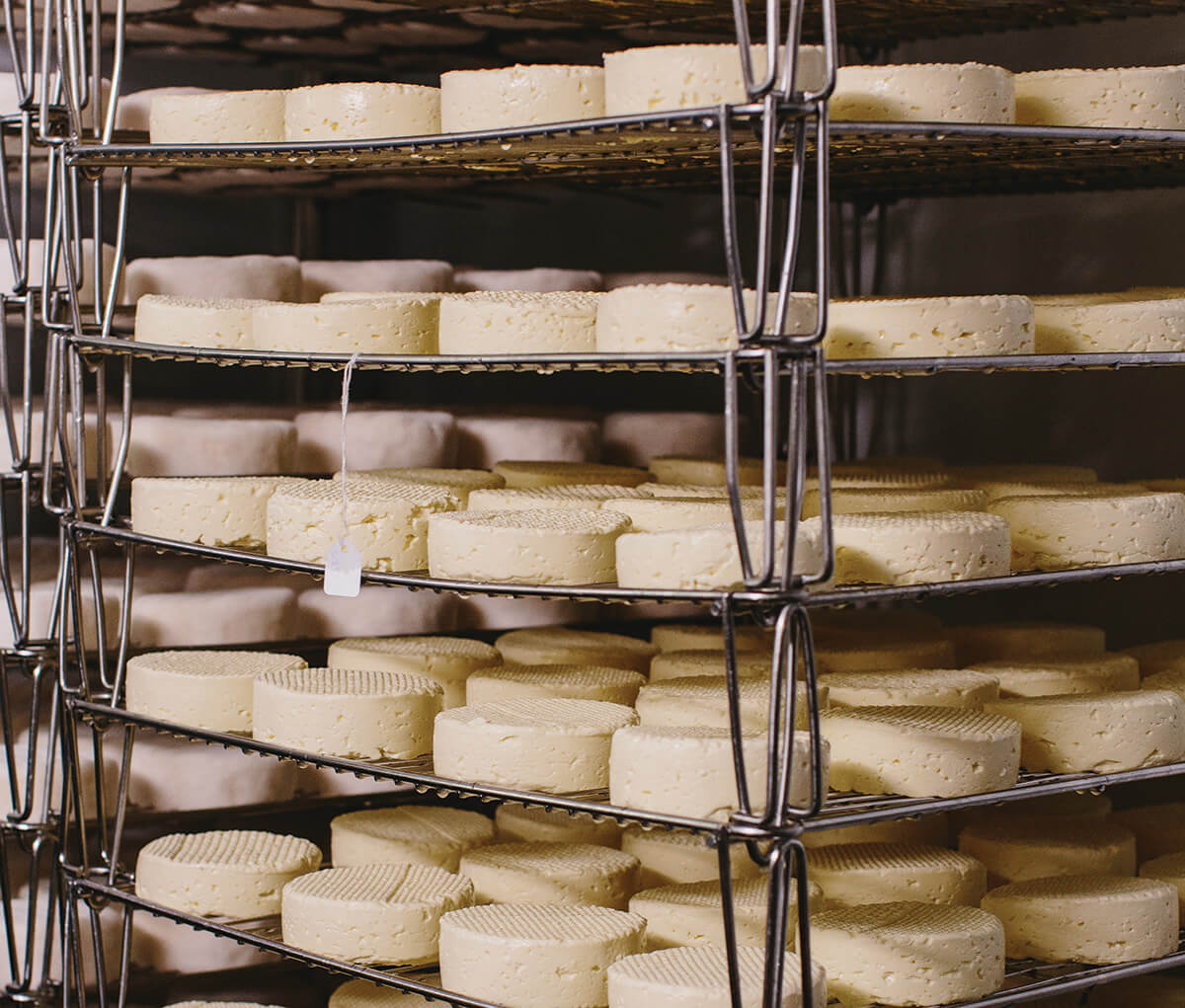
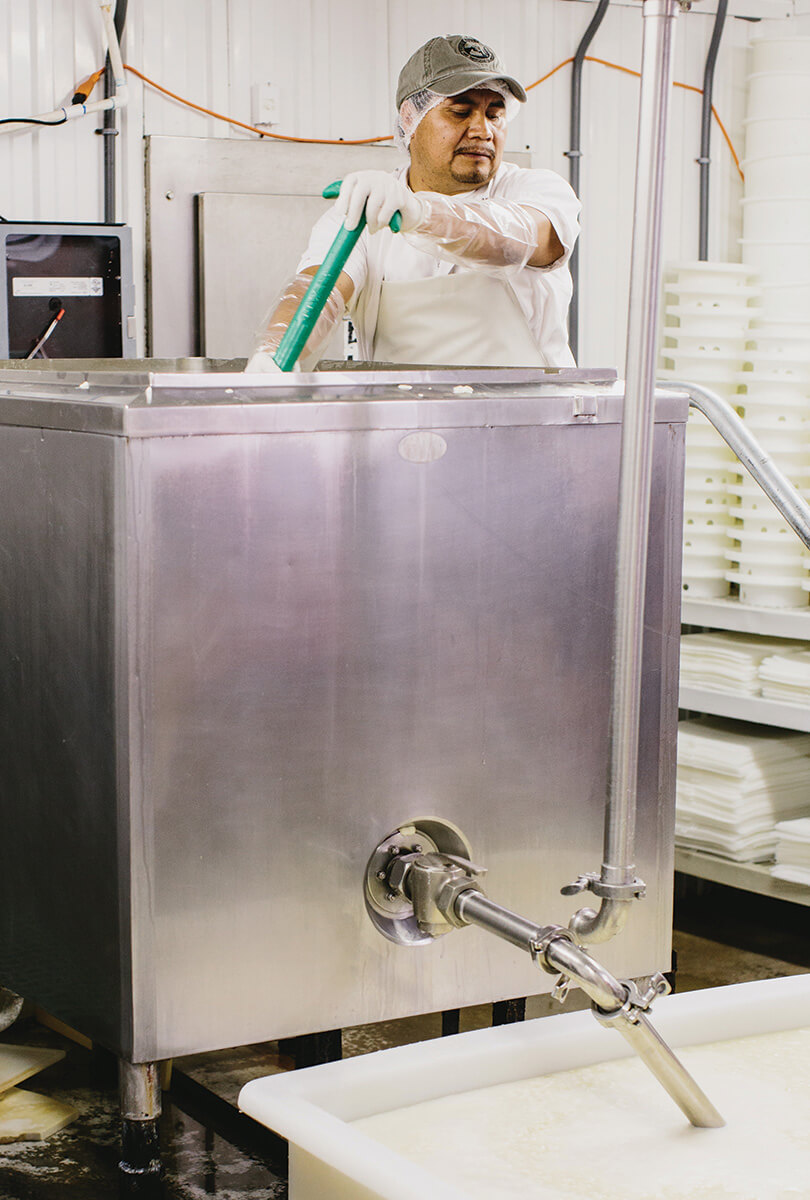
As we walked through the cheese-aging rooms, our noses were assaulted with acrid, ammonia-esque gases seeping forth from the various styles, moldy funk smells signifying the process at work, and other musty, barnyard aromatics. GW explained how cheesemaking really just comes down to changing the pH of milk. Milk is naturally bacteria-friendly, with a neutral pH of about 6.6 or 6.7. When GW and his cheesemaking team add different types of lactic bacteria to the milk, it consumes milk sugar (lactose) and converts it to lactic acid. Depending on the recipe, they want to get the pH down to around 5.
Then it’s time for salting. They do either dry salt (rubbing salt on the outside of thecheese) or brine (a hot-water solution). Salting is a three-day process. The first day, they salt the top and sides of the cheese. The second day, they take the first day’s salt off, flip the cheeses over, and salt their bottoms. On the third day, they remove the remaining salt, then move the cheese to an aging cooler—“kinda like an old seasoned skillet,” Gabe explained. “It builds up all this nice microflora that helps with cheese development and overall flavor. The wheels are continuing to exude gases and moisture in the aging process so that the flavors are becoming more concentrated.”
The farm ships more than 3,000 pounds of cheese every week—mostly to Atlanta, their biggest market, but also lots to New York City, Washington D.C. and Virginia, Chicago, and Florida. “West Coast is still kind of slow, but hopefully we’re gonna drum up a little business later this year,” Gabe said. “It’s not cheap to get product from point A to point B out there.”
In the beginning, Sweet Grass was pretty experimental. In 1999, Desiree took a cheesemaking class at the California Polytechnic State University and came back to Thomasville fully energized and a little obsessed. Soon she was making cheese every day in the family’s kitchen. Jessica remembers visiting her family during college and finding the back porch of the house lined with old refrigerators, full of aging cheese; her brothers, still living at home, would beg her to take some cheese with her when she left. “They were sick of eating so much bad cheese,” she said.
The cheese got better. And as Sweet Grass’s popularity increased, they were forced to scale back their variety, focusing instead on simply meeting demand. They’re not experimenting as much as they’d like, just a few specialty selections throughout the year, but their core lineup is exemplary. Each cheese is like a child to be doted on and loved, each coming with its own series of personality quirks and backstory.
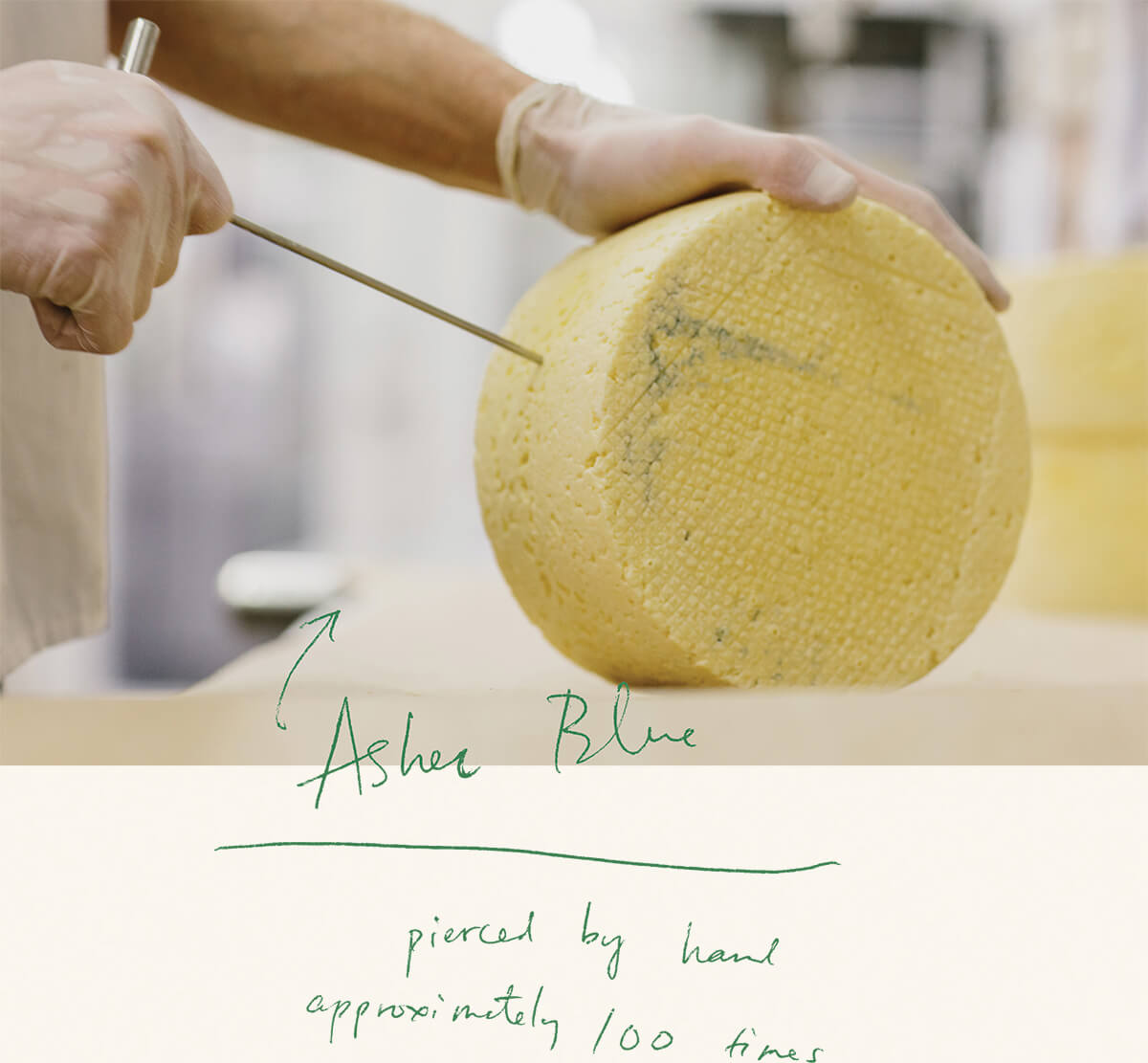
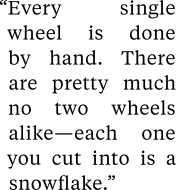
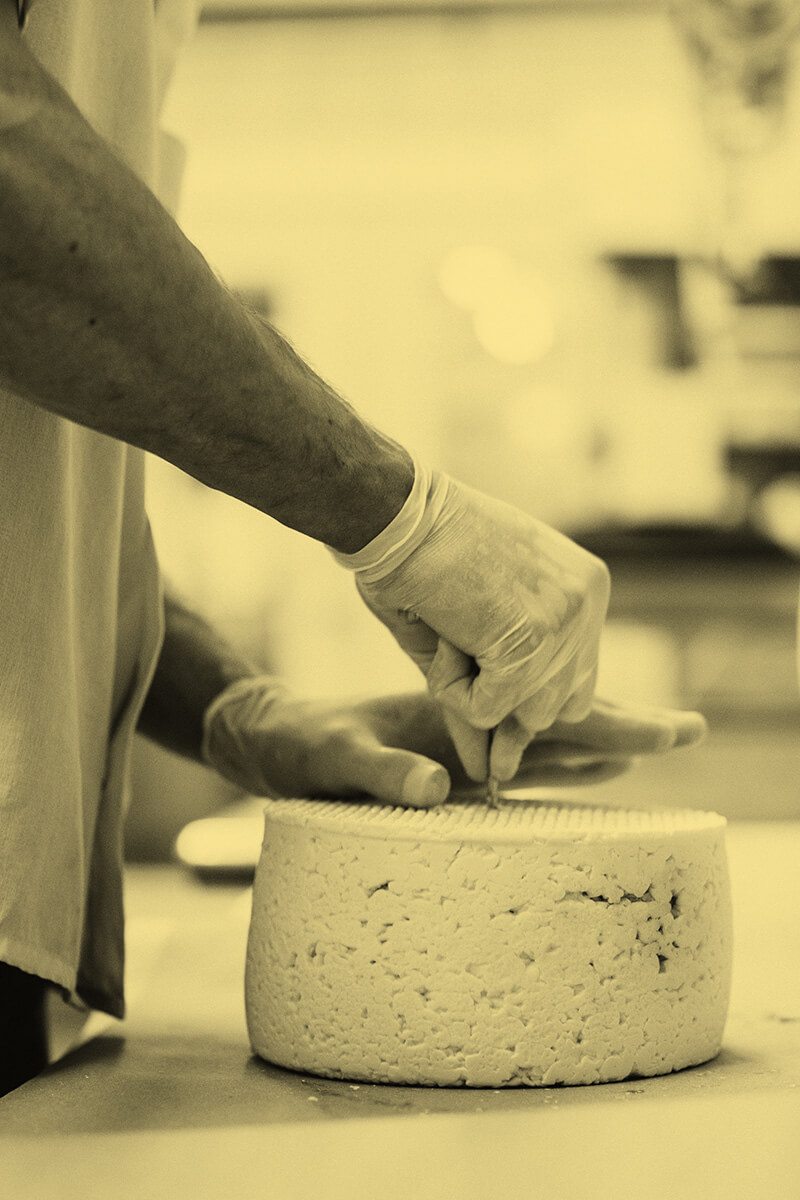
For instance, there’s Asher Blue, one of only three blue cheeses made in America that’s totally natural. “It has a natural rind and it’s hand-pierced approximately a hundred times—with virtually a knitting needle,” Gabe said. “That introduces oxygen into the interior of the wheel, which engages the culture, which is really aggressive, and just needs oxygen to exist. It formulates all those blue veinings and the big, robust flavors. Every single wheel is done by hand. There are pretty much no two wheels alike—each one you cut into is a snowflake.”
We watched several of these snowflakes get stabbed over and over, flipped, then stabbed again. A skinny, bespectacled guy named Brandon Ray did the deed while blasting Torche, Baroness, Kylesa, and various other examples of the Southeast’s very best hard rock ’n’ roll music, at top volume. It was easily the most metal thing that’s ever happened in South Georgia.
Sixty-two people are employed by the Sweet Grass farms and restaurants, but it’s barely enough. “We’ve been tracking missed revenue based on not having product available,” Jeremy told us. “Two weeks ago, [that year to date number was] $17,000. We’ve got an agenda to increase production, but we need another person to make that work. As soon as we find that person, we can upgrade and keep going. That should carry us to a new facility, but it’s about the last ace we have up our sleeve.”
One thing they have in ample supply is milk—which is good, because Sweet Grass would never use anyone else’s milk to make their cheese. “We’re so fortunate to be able to get such high quality milk whenever we want it,” Jessica said. “Jeremy and I never have to worry about the quality or how my parents are running the dairies.”
Sweet Grass owes its existence to this kind of pickiness. Not long after the Wehners bought Green Hill and began rotational grazing, they joined a local milk co-op, which led to their product being mixed in with milk from farms that weren’t working as hard to produce a high-quality product. “They were doing it a different way than most of the industry,” Gabe explained. “They had this awesome, luscious, rich, grassy milk that wasn’t being showcased. They wanted to craft a product that they could move direct to consumer so that the consumer could taste the difference in agricultural approaches. At the end of the day, it’s about educating the consumer to the difference between this and the big corporate model where there’s 1500 cows on concrete that are getting pumped full of everything.”
Sweet Grass also offers cheesemaking classes: Any interested person with $150 can spend the afternoon getting a crash course in cheese education, touring the facility, and making cheese that will be shipped to their home a few weeks later.
The course is taught by Jeremy—who, if you’ll recall, 15 years ago fell so in love with the idea of cheesemaking that he put his own culinary school aspirations on hold. So he understands the human capacity for dairy enthusiasm. Still, he was thrown off once by a woman from the next state over who approached him after class to express a bit of overzealous gratitude.
“In Alabama, we hug!” she exclaimed, before wrapping and clamping her arms around his body.
“She wasn’t letting go!” Jeremy remembered, his eyes bugging out cartoonishly in disbelief as he re-enacted the awkward moment. “And she was praying!”
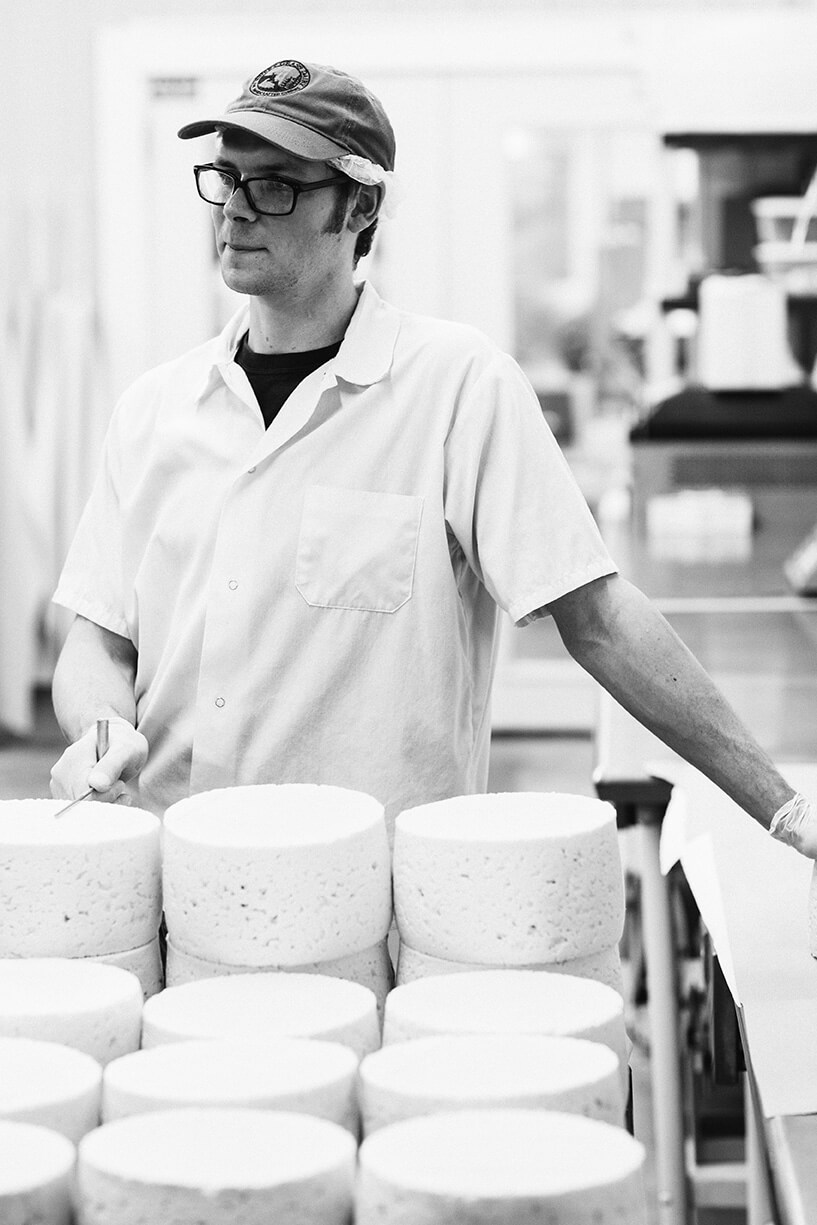
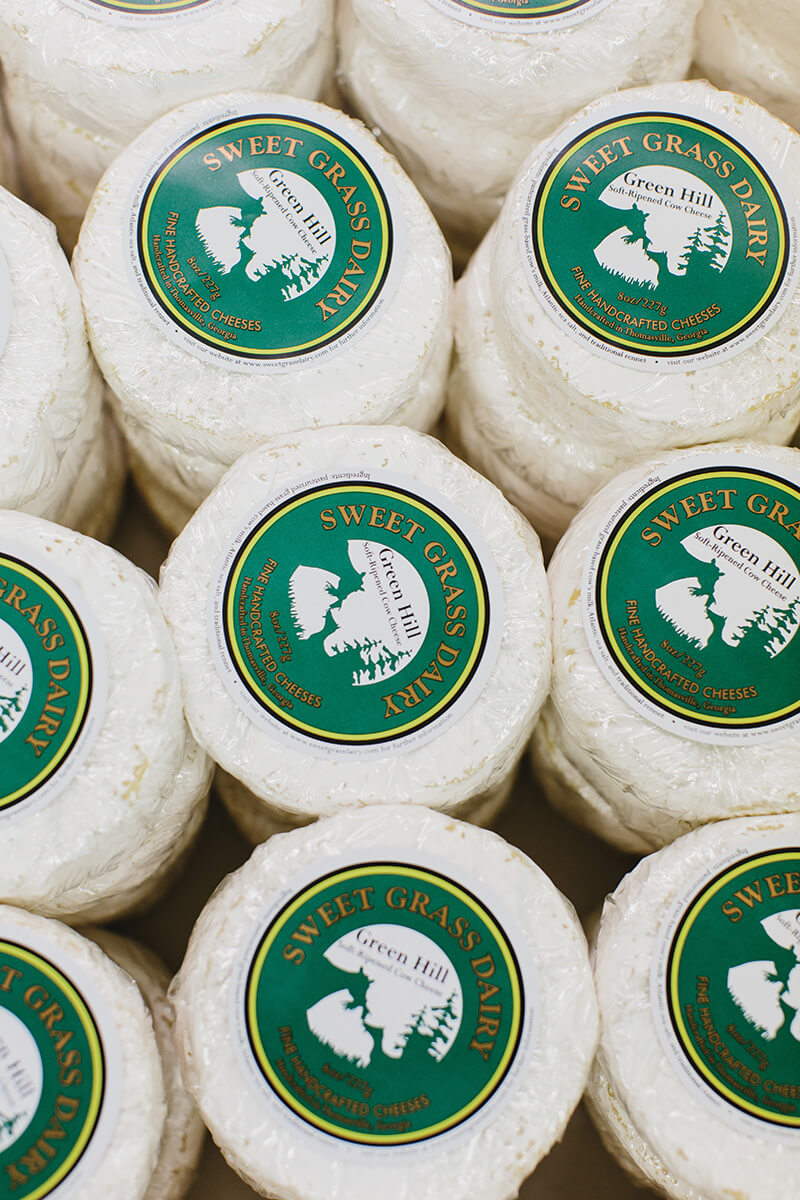
Brandon Ray, cheese stabber; Packaged cheese
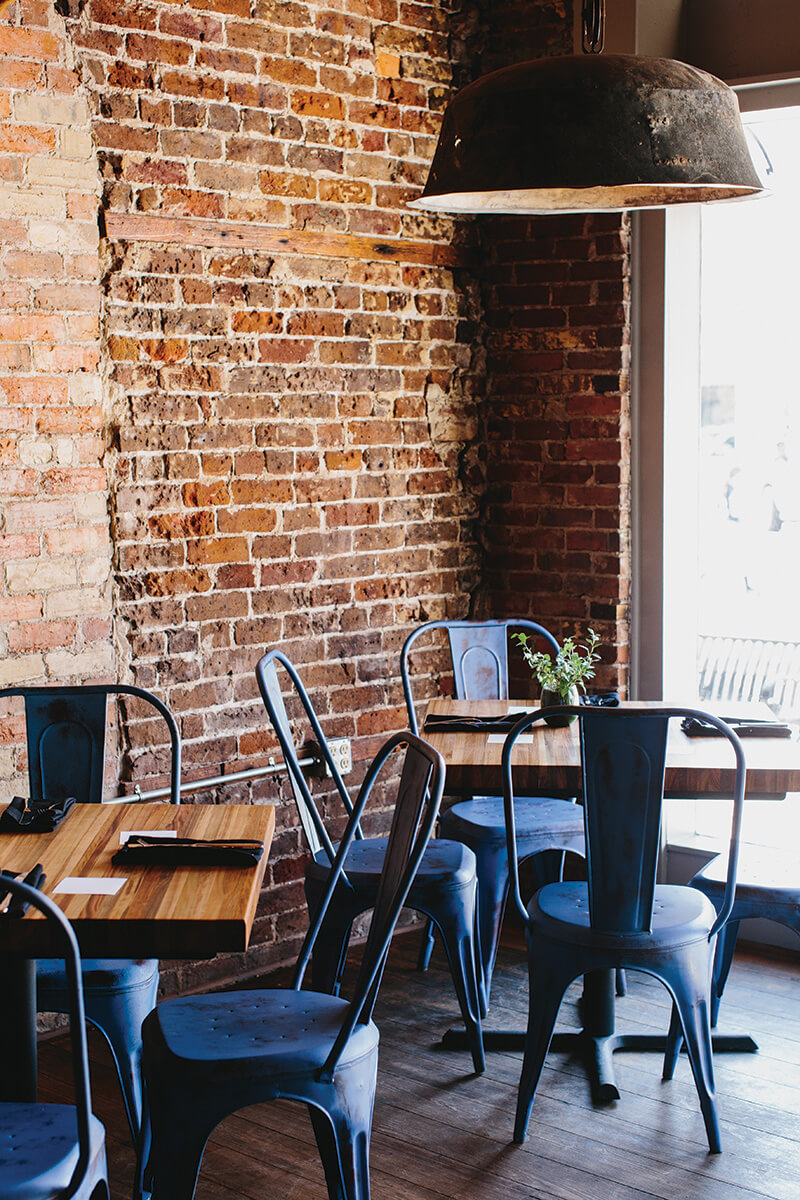
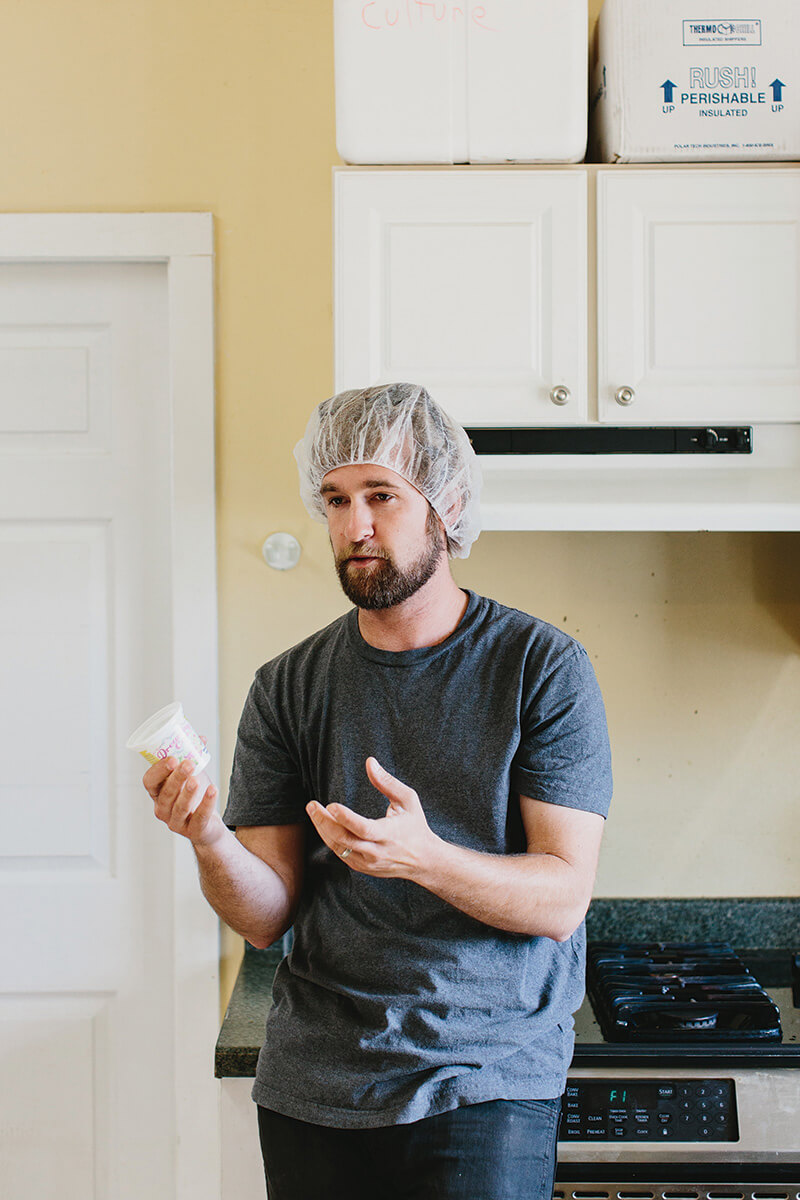
Kyle discussing yogurt; Blue Coop restaurant
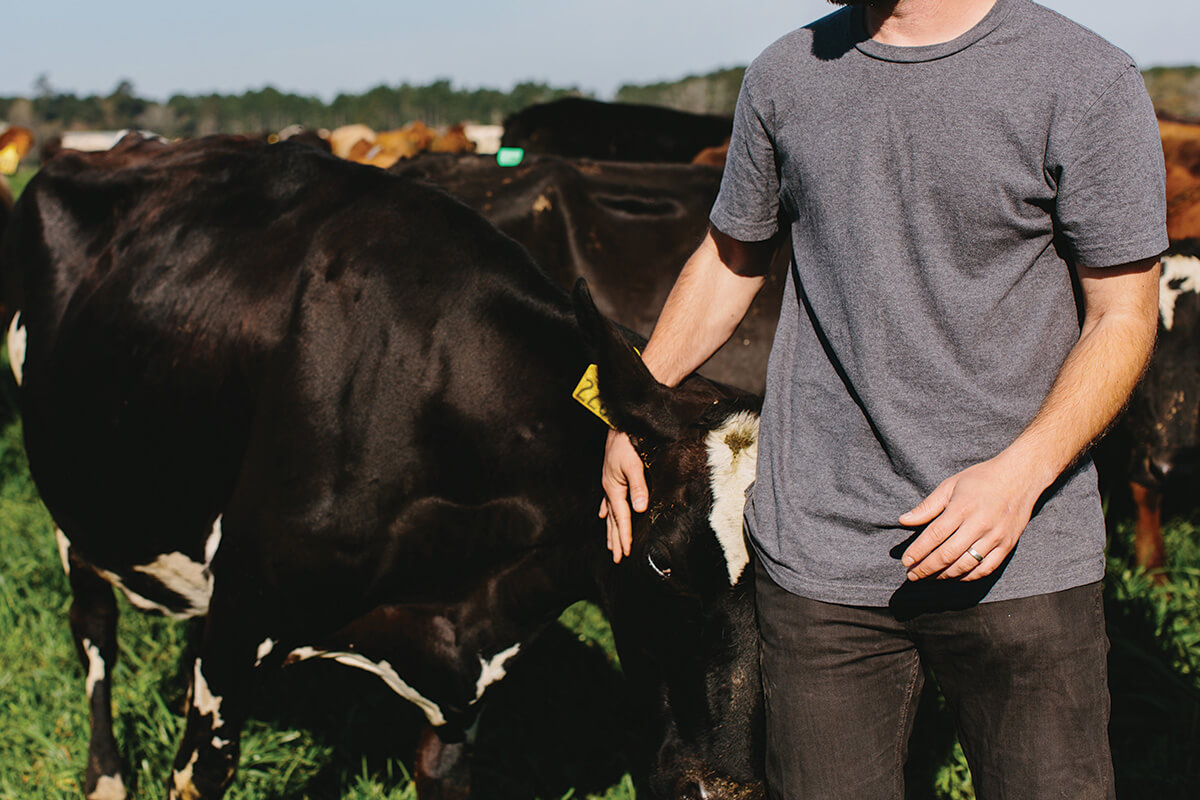
Amanda, the “800 pound cat”
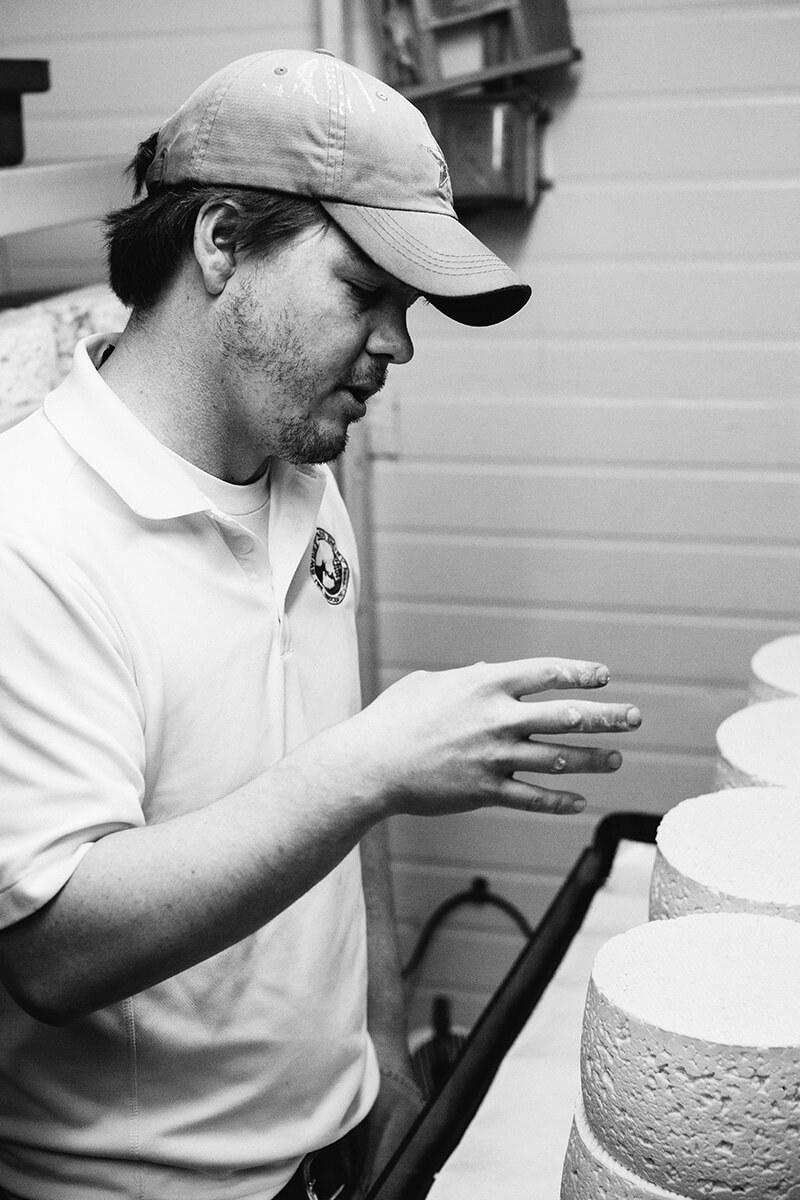
Asher Blue in the cave; Gabe Goodlet
During our trip to Sweet Grass, after a while, all the meals began to blend together. Did we eat that heaping pile of Little Moo on Friday night or Saturday afternoon? Oh, both. Conversations blended, too, into an enthusiastic mashup of shared knowledge and curiosities. Favorite writers, chefs, restaurants, distributors, makers, farmers, service people—it was an unending ode to all that is good about good food.
That includes, of course, Al and Desiree. Jessica remembered calling home during college, complaining to her parents about the other servers at the restaurant where she was waiting tables, who were forever shirking their side-work and closing duties.
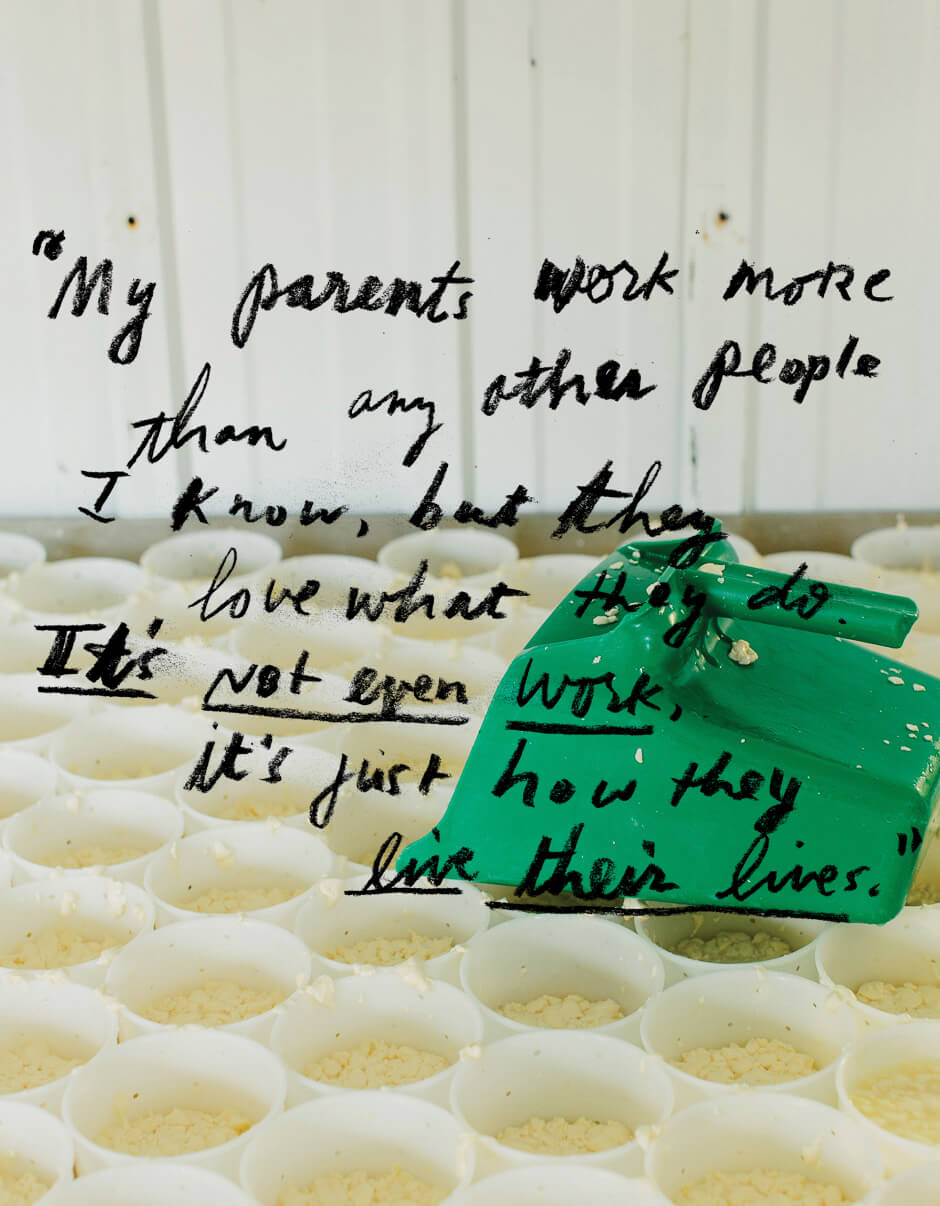
“I vividly remember saying, ‘I can’t believe how some people just don’t know how to work.’ They both started laughing and said that they had been saying that about me for years,” she said. “From the time I was 10 years old, my brothers and I had to work every summer on the farm. It might be cleaning out water troughs, cutting weeds along the fence lines, growing the garden, or being in charge of all the housework. They did not believe in sleeping in or lounging around a pool for summer vacation. It was a struggle for my mom to keep me working—we had awful fights. I can’t tell you how thankful I am to have had the opportunity to be taught how to work. My parents work more than any other people I know, but they love what they do. It’s not even work, it’s just how they live their lives.”
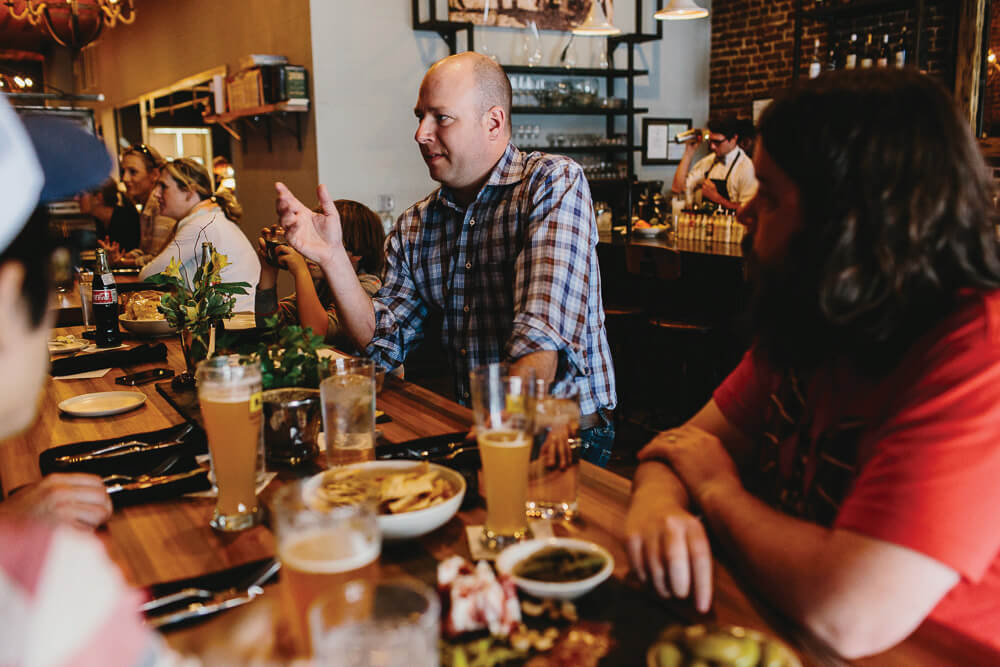
Saturday afternoon, though, Jessica, Jeremy, and couple of their boys took a break to sit down with us at one of the long wooden tables at Blue Coop. The hearth crackled with local pecan wood, the embers of which would eventually be used for compost on the farm along with seafood bones and shells and vegetable scraps. The bar served its spin on classic cocktails and a handful of well-chosen beers. A heaping cheese plate arrived, piled high with meat and nuts, and we dug in. Every time a plate or glass emptied, another one appeared. At one point in the afternoon, the Little boys emerged carrying more cheese. Our bodies (not to mention our car) were already loaded down, but we packed it away anyhow. We had a lot of cheese. More than we could handle. But it was a good problem to have.
We’d been making them talk about their own work all day, but in general, Jessica and Jeremy seem more interested in talking about other food-makers, other projects, other professional appreciators. They’re less interested in touting their own very toutable work than singing the praises of others, the people and places across the South and the country who are doing the good work, as they see it: Al and Desiree, the Southern Foodways Alliance, John T. Edge, various restaurateurs in Georgia and elsewhere. People unafraid to throw their plans out the window and embrace the winding, hole-riddled road into the future. People who don’t flinch at the difficulties that come with doing something you love as best you can with limited resources.
People who aren’t sure, exactly, what’s going to happen, but feel confident, somehow, that they’re moving in the right direction. People who work to make things better, bit by bit. People a lot like them.
What’s going on here?
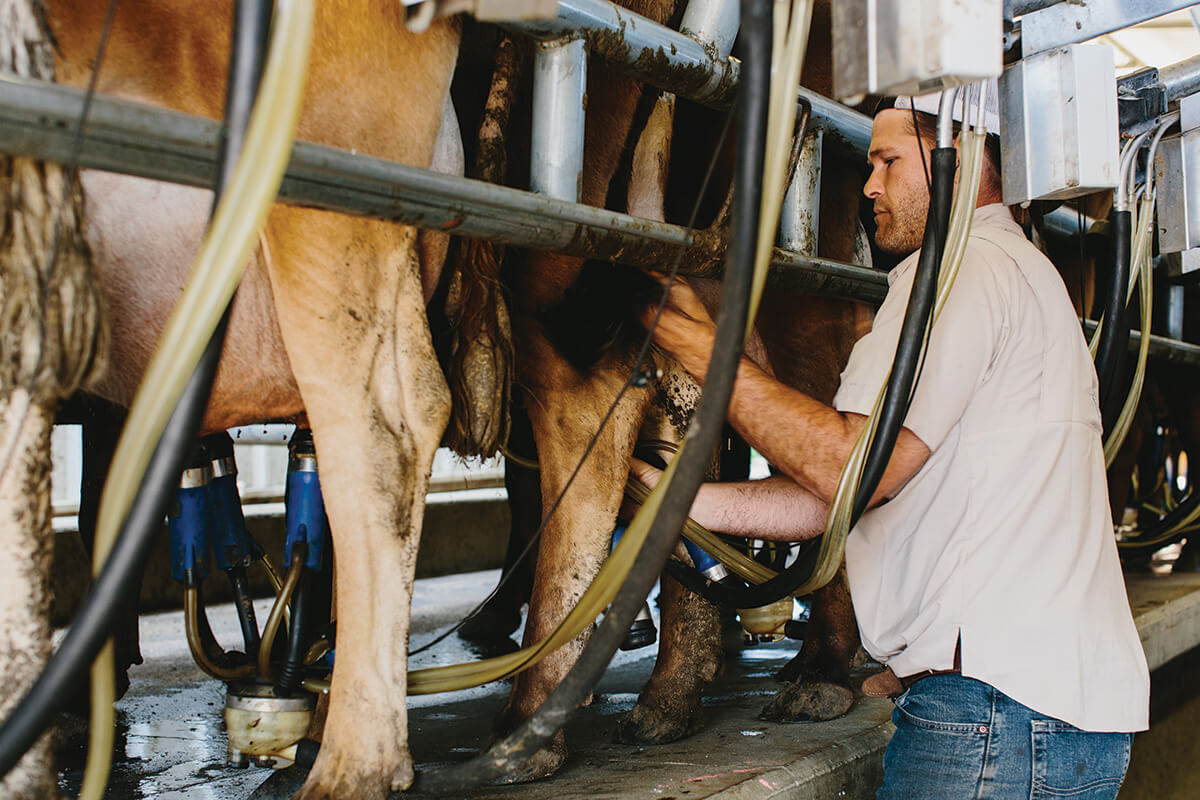
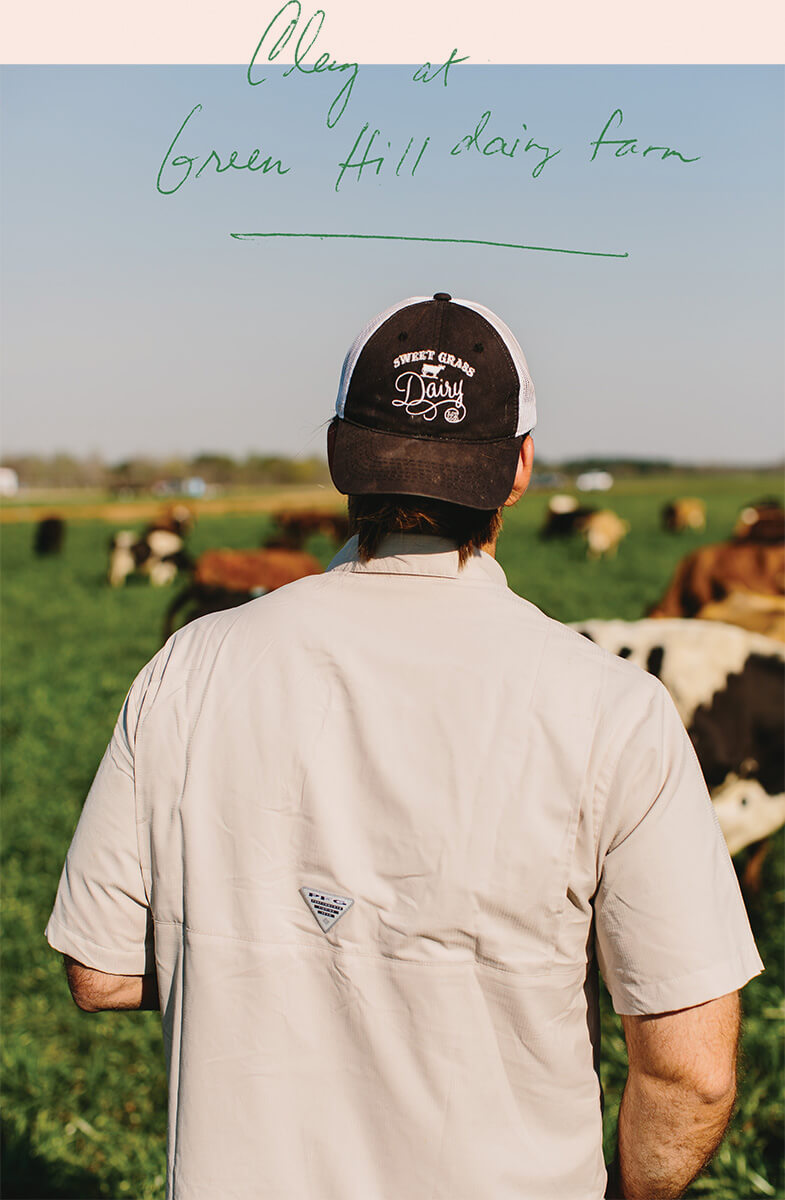
Clay milking cows at Green Hill dairy farm
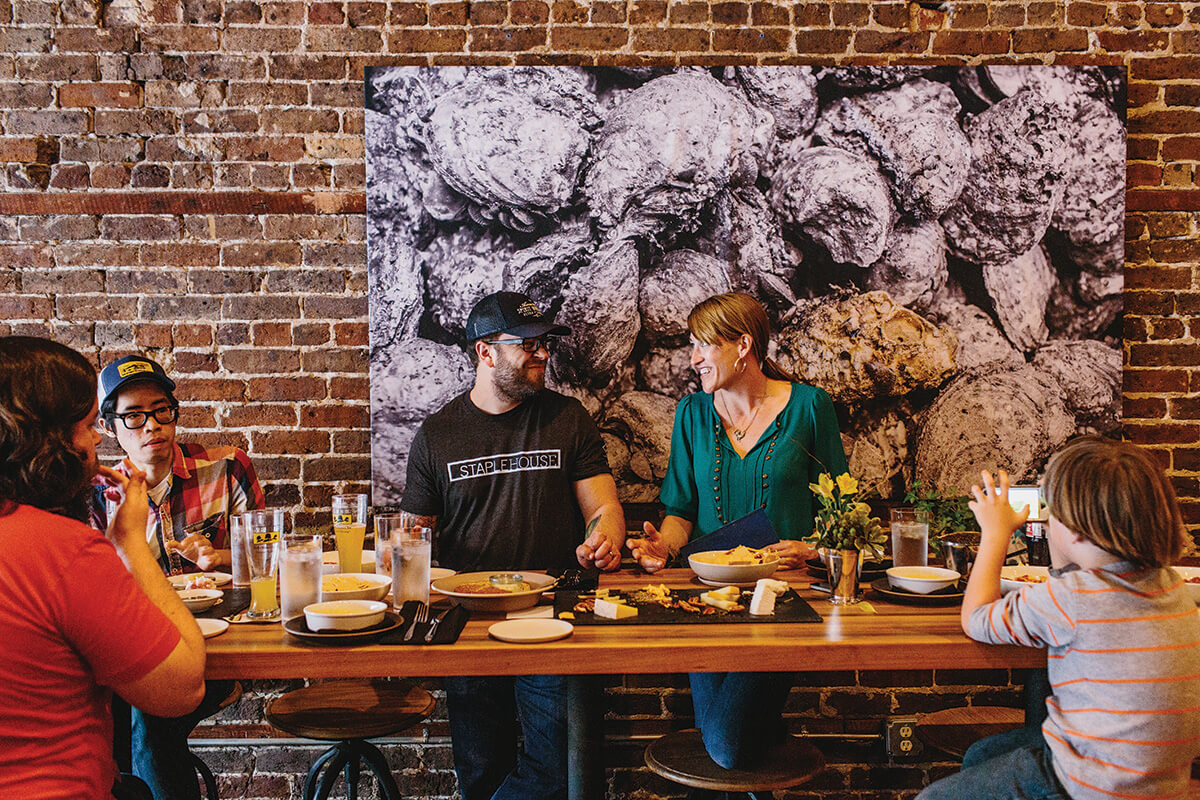
Lunch at Blue Coop
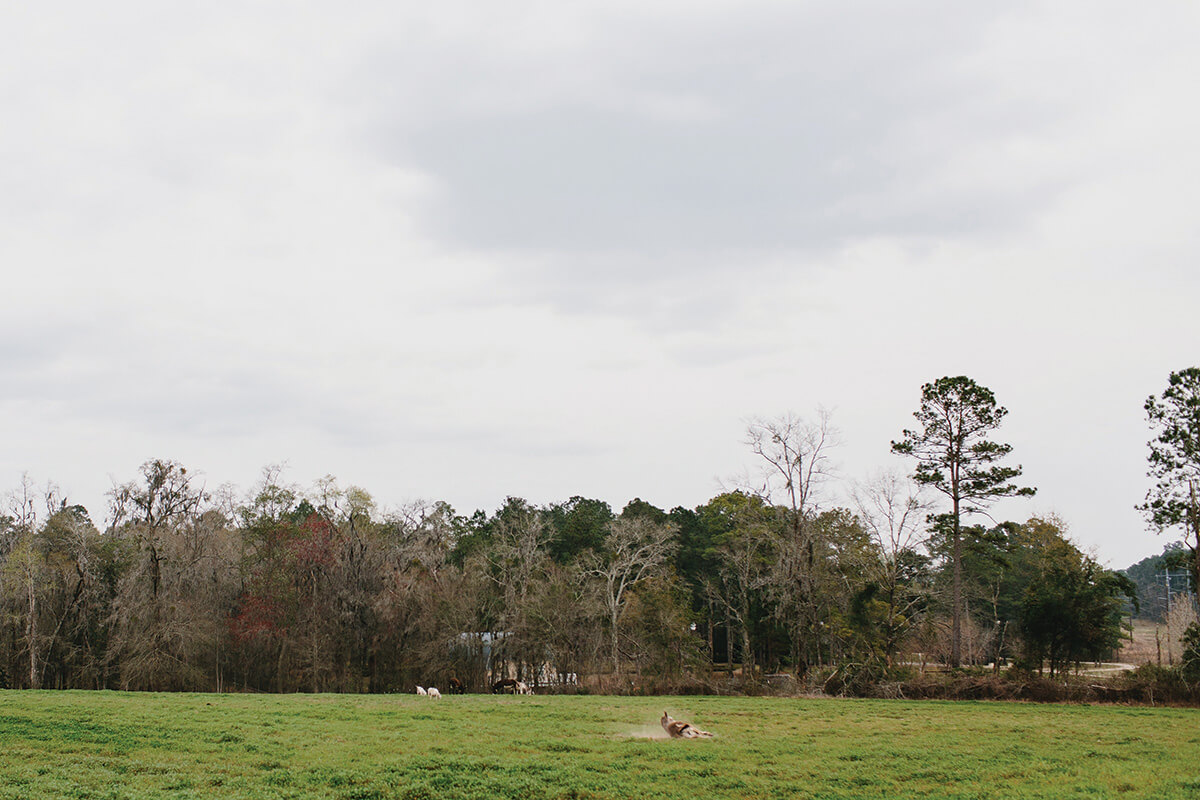
Donkeys playing along Limousine Lane
RECIPE
A Cheese Plate
Brother Issue 03 — Summer 2014
| Director | Ryan Smith |
|---|---|
| Photography | Andrew Thomas Lee |
| Design | Alvin Diec |
| Writing | Austin L. Ray |
| Typo Patrol | Kate Kiefer Lee |
| Code | David Sizemore |
THANKS TO
Jeremy Little, Jessica Little, Clay Wehner, Kyle Wehner, Gabe Goodlett, George “GW” Jenkins, Brandon Ray, the staff at the Cheese Shop and Blue Coop